 8.6 out of 10 based on 81026 reviews








.svg)
.svg)
.svg)
.svg)
.svg)
.svg)



 Menu
Menu
-
 Vaporshop
All Categories
Vaporshop
Vaporshop
All Categories
Vaporshop
- Top 10 Vaporizers
- Spare Parts & Accessories
- AirVape XS GO (2021)
- Arizer Air MAX
- Arizer Extreme Q
- Arizer Solo 2
- Arizer V-Tower
- Arizer XQ2
- Boundless CFC 2.0 Vaporizer
- Boundless CFX
- Boundless TERA (V3)
- CRAFTY+
- DaVinci IQC
- Dr. Dabber Boost EVO
- DynaVap VapCap "M" PLUS 2023
- DynaVap VonG (i) Titanium
- Flowermate Aura
- Flowermate Cap Pro
- Flowermate Slick
- Flowermate V5.0S Pro
- G Pen Elite II
- G Pen Micro+
- G Pen Roam
- Hyer Big-E Rig
- MIGHTY+
- PAX Mini
- PAX Plus
- PLENTY
- Puffco Peak Smart Rig
- Puffco Plus
- Storm Vaporizer
- The Proxy (Puffco)
- VOLCANO CLASSIC
- VOLCANO HYBRID
- Vapman 2.0
- Vapman Click
-
 Smartshop
All Categories
Smartshop
Smartshop
All Categories
Smartshop
- Top 10 Smartshop
- Zamnesia Gift Cards
- After Party
- Aphrodisiacs
- Aromatherapy
- Blue Lotus
- Capsule Machines
- Crystals, Gemstones & Minerals
- Dream Herbs
- Drug Tests
- Extracts
- Happy Caps
- Herbal Tea
- Herbs & Seeds
- Incense
- Kanna
- Kratom
- LSA Seeds
- Mescaline Cactus
- Microdosing
- Nootropics
- Relaxing
- Salvia divinorum
- Smart Seeds
- Stimulants
- Supplements
- Tinctures
- Vape Herbs
-
 TRIBE
All CategoriesTRIBE
TRIBE
All CategoriesTRIBE
- My Membership
- Spend Gift Points
- TRIBE Sale
- Exclusive products
- Earn Extra Gift Points
- Early Access
- Refer a Friend
- Information
 Mushroom Dosage Calculator


 Help
Help United States
A Closer Look At The Dream Enhancing Silene Capensis
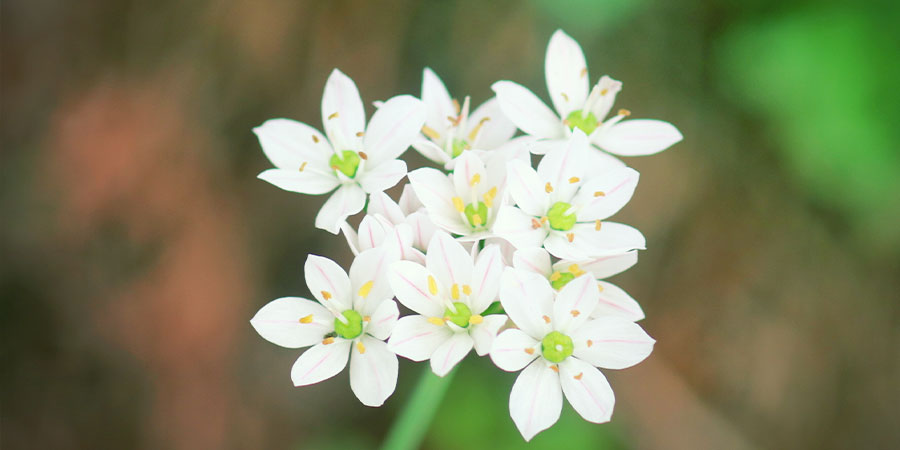



Known across Europe as African dream root, and sometimes as gunpowder root, Silene capensis is a psychoactive species native to the Eastern Cape of South Africa. In the garden it behaves as a tender perennial: undemanding to cultivate and remarkably tolerant of hot weather, provided you keep the water coming in generous quantities. Its blossoms carry an unmistakable perfume that people tend to liken to cloves mingled with banana and jasmine. The real interest, though, lies underground, for it is the root that houses the psychoactive compounds responsible for strikingly vivid and occasionally lucid dreams.
For centuries, the African dream root has held a place in entheogenic ritual. To the Xhosa of South Africa it is a sacred teacher plant: by taking the root, they open a channel to their ancestors, traditionally those of the father's line, and receive guidance and counsel while they sleep. It also occupies an important position in the ceremonies through which Xhosa shamans are initiated.

What actually makes the root psychoactive? The prevailing assumption points to the triterpenoid saponins it contains. Curiously, these compounds barely register while you are awake, yet once you drift off their influence can be considerable. Hard science on the plant remains scarce; beyond a single study examining these saponins, our understanding rests largely on traditional use and the accounts of individual dreamers.
How Silene capensis affects your dreams

Above all, African dream root is taken to make dreams more vivid and, ideally, lucid, while also improving how well you sleep. Expect your dreams to gain intensity and stick in the memory far better; seasoned dreamers may even find themselves fully aware within them. The root supports lucidity rather than guaranteeing it, and those who have already spent time learning to navigate the dreamworld will reach that state most readily.
Bear in mind that nothing may happen on the first night; it commonly takes several days of use before the vividness arrives. When it does, the dream world opens up on a far more conscious level. Many people notice the colours in their dreams becoming strikingly saturated, and some gain enough awareness to nudge a dream in whichever direction they choose. Xhosa tradition puts this state to work: hold a question in your mind as you fall asleep, and your ancestors are said to deliver the answer through your dreams.
Waking up after a night on the root tends to feel wonderfully restorative; even a mere six hours can leave you as rested as a full eight. There is a catch, however: whatever you dreamt usually slips away within a day. Anyone keen to preserve the details should keep a dream journal within arm's reach and jot everything down the moment they open their eyes.
Taken in one large dose, the root can act as a purgative. Nothing harmful has ever been documented, but it may well make you sick, so keeping to the recommended amounts is the wise course.
How to prepare your dream root
Silene capensis lends itself to three popular preparations: the time-honoured foam of the Xhosa, home-filled capsules, and a straightforward dream tea. The root does the same work in all three; which you pick comes down to whether you value ceremony or ease.
The Xhosa foam ritual

Generations of Xhosa have taken the root exactly this way. Crush roughly 200-250mg to a powder, add it to half a cup of water, and whisk vigorously until a dense cap of white foam sits on the surface. Doing this by hand demands patience, so most people now tip everything into a jar, screw the lid on and give it a good shake instead. Lift the foam off with a spoon, or draw it up with a straw, and take only the froth; the water beneath is left alone. Shake up a fresh layer and repeat until you feel pleasantly full. Custom dictates taking it at daybreak on an empty stomach, then eating normally as soon as your appetite comes back.
Filling your own capsules

Traditional as the foam may be, Silene capensis works best when taken day after day, and for a routine like that capsules are hard to beat. Simply grind the root and spoon the powder into gel caps. A sensible daily intake sits between 500mg and an absolute ceiling of 3g, spread across several days; begin modestly and raise the amount gradually as your body becomes acquainted with the plant. More is not automatically better here, which is why most users settle on 1g per day. Swallow your capsule about thirty minutes before bedtime, and should sleep not arrive on schedule, there is no need to fret; the root has a calming reputation, so simply let it work. A final tip: ground Silene capensis oxidises at speed, so only powder what you intend to use straight away.
Brewing a dream tea
Fancy it as a drink instead? Take a section of root around 2cm long, grind it, and combine it with a tablespoon of cinnamon and a tablespoon of ground ginger. Pour the blend into a cup of freshly boiled water, add honey or sugar to taste, and give it a couple of minutes to settle. A dash of milk or cream rounds off the flavour without touching the effects. And if herbal brews appeal to you generally, there are plenty of other herbs that make a fine infusion too.
Worth knowing before your first night

Before you begin, a little perspective helps. Serious research into this root is thin and mostly anecdotal, so approach every claim on this page with an open yet questioning mind. No adverse effects or fatalities have ever appeared in the record, though anyone pregnant or breastfeeding should give it a miss. Among long-standing users there is also talk of the effects becoming permanent after around three months of daily use; whether or not that holds true, scheduling a pause every couple of months to observe how you sleep unaided is a sound habit.
As for the law, African dream root appears to be prohibited nowhere, although confirming the rules where you live remains down to you. With that settled, all that is left is to whisk, swallow or steep, and listen to what your dreams have to tell you. Should plants of this kind intrigue you, our dream herbs range offers several more to explore. Sleep well, and dream deeply!
-
 +4 Extra Gift Points
 -
+3 Extra Gift Points
-
+7 Extra Gift Points
-
-
£5.99
-
-
£3.49+2 Extra Gift Points
-
-
+3 Extra Gift Points



-

 8 min
10 October 2022
How To Use Cannabis To Improve Sleep
Le cannabis est utilisé à bien des escients, y compris la promotion d'un sommeil sain. Mais bénéficie-t-il réellement au sommeil ? Est-il plutôt nocif ? Quels composés précis du cannabis sont ...
8 min
10 October 2022
How To Use Cannabis To Improve Sleep
Le cannabis est utilisé à bien des escients, y compris la promotion d'un sommeil sain. Mais bénéficie-t-il réellement au sommeil ? Est-il plutôt nocif ? Quels composés précis du cannabis sont ...
-
 1 min
6 November 2017
Best Incense For Relaxation And Sleep
Here at Zamnesia, we bring you all sorts of herbs. Herbal incense is a safe and cost-effective way to unwind. Discover our best varieties of incense for easing the mind, body and soul. ...
1 min
6 November 2017
Best Incense For Relaxation And Sleep
Here at Zamnesia, we bring you all sorts of herbs. Herbal incense is a safe and cost-effective way to unwind. Discover our best varieties of incense for easing the mind, body and soul. ...
-
 2 min
27 August 2014
Exploring The Dreamworld With Calea Zacatechichi
Originating from Mexico, Calea is a fascinating dream herb that has long been used by indigenous tribes as way of seeking guidance from the spirits. ...
2 min
27 August 2014
Exploring The Dreamworld With Calea Zacatechichi
Originating from Mexico, Calea is a fascinating dream herb that has long been used by indigenous tribes as way of seeking guidance from the spirits. ...