 8.6 out of 10 based on 81308 reviews







.svg)
.svg)
.svg)
.svg)
.svg)
.svg)



 Menu
Menu
-
 Vaporshop
All Categories
Vaporshop
Vaporshop
All Categories
Vaporshop
- Top 10 Vaporizers
- Spare Parts & Accessories
- AirVape XS GO (2021)
- Arizer Air MAX
- Arizer Extreme Q
- Arizer Solo 2
- Arizer V-Tower
- Arizer XQ2
- Boundless CFC 2.0 Vaporizer
- Boundless CFX
- Boundless TERA (V3)
- CRAFTY+
- DaVinci IQC
- Dr. Dabber Boost EVO
- DynaVap VapCap "M" PLUS 2023
- DynaVap VonG (i) Titanium
- Flowermate Aura
- Flowermate Cap Pro
- Flowermate Slick
- Flowermate V5.0S Pro
- G Pen Elite II
- G Pen Micro+
- G Pen Roam
- Hyer Big-E Rig
- MIGHTY+
- PAX Mini
- PAX Plus
- PLENTY
- Puffco Peak Smart Rig
- Puffco Plus
- Storm Vaporizer
- The Proxy (Puffco)
- VOLCANO CLASSIC
- VOLCANO HYBRID
- Vapman 2.0
- Vapman Click
-
 Smartshop
All Categories
Smartshop
Smartshop
All Categories
Smartshop
- Top 10 Smartshop
- Zamnesia Gift Cards
- After Party
- Aphrodisiacs
- Aromatherapy
- Blue Lotus
- Capsule Machines
- Crystals, Gemstones & Minerals
- Dream Herbs
- Drug Tests
- Extracts
- Happy Caps
- Herbal Tea
- Herbs & Seeds
- Incense
- Kanna
- Kratom
- LSA Seeds
- Mescaline Cactus
- Microdosing
- Nootropics
- Relaxing
- Salvia divinorum
- Smart Seeds
- Stimulants
- Supplements
- Tinctures
- Vape Herbs
-
 TRIBE
All CategoriesTRIBE
TRIBE
All CategoriesTRIBE
- My Membership
- Spend Gift Points
- TRIBE Sale
- Exclusive products
- Earn Extra Gift Points
- Early Access
- Refer a Friend
- Information
 Mushroom Dosage Calculator


 Help
HelpGrowshop: Grow Tents, Lights and Growing Equipment
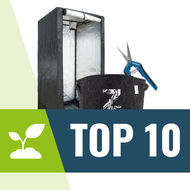
Setting up a grow room in the UK comes down to three decisions: the grow tent size you can give up the floor for, the LED grow lights or HPS lamps that footprint needs, and the carbon filter and extractor fan that get the warm air back out. Add veg and bloom nutrients plus pH and EC meters and you have the whole list. Our growshop covers all of it.
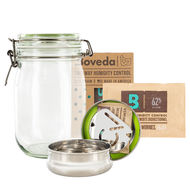

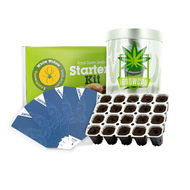

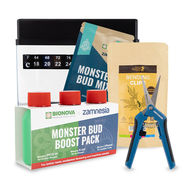
Building a Grow Room That Works
Most first grow rooms in the UK fail on the same two things: not enough extraction, and a light that does not cover the tent. Both are cheap to get right at the start and expensive to fix halfway through a run.
What Is a Growshop and What Do We Stock
Our growshop carries the full chain: propagation and germination kits, grow tents, lighting, ventilation, nutrients, substrate, and the trimming shears and drying gear you reach for at the end. Stocking it as one range is the point, because the failure mode we see most is a light bought without reference to the tent it has to cover.
Grow Tents, Complete Kits and Tent Sizes
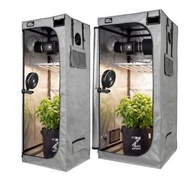
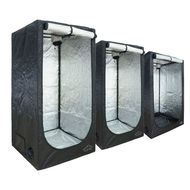
Our grow tents run from 60x60x180 to 120x120x200, and the same footprints exist as complete kits with the light and ventilation matched for you. A 60x60 suits a spare-room corner and two plants. A 120x120 needs a dedicated room, because you will be running ducting out of it.
Grow Lights: LED vs HPS, Wattage and PAR
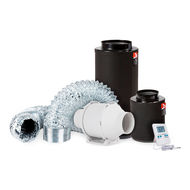
Reckon on about 120 W of LED for a 60x60, 320 W for a 100x100 and 480 W for a 120x120; our grow lights are stocked in those steps. LED has largely replaced HPS for home growing because it draws less power and throws less heat, and PAR output tells you how much of that light the plant can actually use. Run 18 hours on in veg and 12 in bloom for photoperiod plants. Ventilation is the other half: extractor, ducting and a 150 mm carbon filter, with a controller from climate control to hold humidity where you want it.
Nutrients and Feeding by Stage
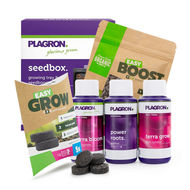
Feeding splits cleanly in two. Through veg the plant wants nitrogen to build leaf and stem; through bloom it shifts to phosphorus and potassium to fill out the flowers. Buy a base pair rather than a shelf of bottles, start at half the stated dose, and add a pH meter before you add anything else. Harvest and curing gear is the other end of the same job, and drying too fast is the one mistake you cannot undo.
Grow Room Setup Checklist
- Measure the space, then pick the tent one size down from what you think fits.
- Match LED wattage to the tent footprint.
- Fit an extractor fan and carbon filter before your first seed.
- Choose hydroponics or a soil substrate: soil is forgiving, hydro is faster and less patient.
- Add pH and EC meters, then veg and bloom nutrients from the nutrient range at half strength.
- Start seeds with a propagation and germination kit.
- Have trimming shears and drying gear from harvest, dry and cure ready before harvest week.
Outdoors costs almost nothing and gives one harvest a year, weather permitting, which in the UK is a real caveat. The nutrients and pots carry over if you move inside later, so nothing is wasted. The rest sits in accessories and grow supplies, and orders leave in plain packaging.
FAQ
- Do you ship growing equipment to the UK?
Yes, across the UK in plain, unbranded packaging with nothing on the outside describing the contents.
- What size grow tent should I buy?
Choose on floor space. A 60x60 fits a spare-room corner and two plants; a 120x120 needs a dedicated room because ducting has to leave it. When in doubt, go one size down from what you think fits.
- LED or HPS for a home grow room?
LED for almost everyone now. It draws less power and throws far less heat, which matters in a small British room with limited ventilation. HPS is cheaper to buy but costs more to run and adds a heat problem you then have to solve.
- How do I stop my grow room smelling?
An extractor fan pulling through a carbon filter, 150 mm for most home tents. The filter is the part that does the work, and it is the one people try to skip.