 8.6 out of 10 based on 80997 reviews








.svg)
.svg)
.svg)
.svg)
.svg)
.svg)



 Menu
Menu
-
 Vaporshop
All Categories
Vaporshop
Vaporshop
All Categories
Vaporshop
- Top 10 Vaporizers
- Spare Parts & Accessories
- AirVape XS GO (2021)
- Arizer Air MAX
- Arizer Extreme Q
- Arizer Solo 2
- Arizer V-Tower
- Arizer XQ2
- Boundless CFC 2.0 Vaporizer
- Boundless CFX
- Boundless TERA (V3)
- CRAFTY+
- DaVinci IQC
- Dr. Dabber Boost EVO
- DynaVap VapCap "M" PLUS 2023
- DynaVap VonG (i) Titanium
- Flowermate Aura
- Flowermate Cap Pro
- Flowermate Slick
- Flowermate V5.0S Pro
- G Pen Elite II
- G Pen Micro+
- G Pen Roam
- Hyer Big-E Rig
- MIGHTY+
- PAX Mini
- PAX Plus
- PLENTY
- Puffco Peak Smart Rig
- Puffco Plus
- Storm Vaporizer
- The Proxy (Puffco)
- VOLCANO CLASSIC
- VOLCANO HYBRID
- Vapman 2.0
- Vapman Click
-
 Smartshop
All Categories
Smartshop
Smartshop
All Categories
Smartshop
- Top 10 Smartshop
- Zamnesia Gift Cards
- After Party
- Aphrodisiacs
- Aromatherapy
- Blue Lotus
- Capsule Machines
- Crystals, Gemstones & Minerals
- Dream Herbs
- Drug Tests
- Extracts
- Happy Caps
- Herbal Tea
- Herbs & Seeds
- Incense
- Kanna
- Kratom
- LSA Seeds
- Mescaline Cactus
- Microdosing
- Nootropics
- Relaxing
- Salvia divinorum
- Smart Seeds
- Stimulants
- Supplements
- Tinctures
- Vape Herbs
-
 TRIBE
All CategoriesTRIBE
TRIBE
All CategoriesTRIBE
- My Membership
- Spend Gift Points
- TRIBE Sale
- Exclusive products
- Earn Extra Gift Points
- Early Access
- Refer a Friend
- Information
 Mushroom Dosage Calculator


 Help
Help United States
THC Detox Calculator
Use our THC Detox Calculator to estimate when THC will be cleared from your system, helping you pass a blood or urine test. Complete the steps below to find out how long it will take.
THC Detox Calculator
How long does THC stay in your body? It depends on you, your habits, and the type of test. Our THC Detox Calculator uses a few personal details to estimate how long THC and its by-products may remain detectable. Fill in the steps below for a personalised estimate, and read on to understand the science behind the numbers.
Learn More About Our THC Detox Calculator
THC behaves differently from many other substances. Instead of leaving the body quickly, it’s stored in fat and released back into the bloodstream slowly over time [1]. That’s why there’s no single, fixed answer to “how long does it last?” The honest answer is a range that depends on you. By entering details such as your body characteristics and how you consume, the calculator estimates a realistic detection window based on the factors known to influence how the body processes THC.
Why THC Sticks Around: Half-Life and Fat Storage
A substance’s half-life is the time it takes for the amount in your body to drop by half. For THC this is more complicated than for most compounds. THC (delta-9-tetrahydrocannabinol) is highly fat-soluble. After use, levels in the blood fall fairly quickly, but a portion is taken up by fatty tissue and then released back into the blood gradually, where the liver breaks it down into metabolites, chiefly THC-COOH, that leave the body in urine and stool [1].
Because of this slow release from fat, full elimination takes much longer than the initial drop in blood levels would suggest, and estimates of THC’s effective half-life vary widely from person to person. The inactive metabolite THC-COOH, the compound most urine tests actually look for, can persist for days, and in frequent users for weeks [1][2]. Each session effectively “tops up” the reservoir stored in fat, which is the main reason regular users clear THC far more slowly than occasional ones.
What Affects How Long THC Is Detectable
Several factors shape your personal detection window, which is exactly why the calculator asks about them:
- Frequency and duration of use: the single biggest factor. Regular, long-term use builds up a store in fatty tissue that takes much longer to clear [1][2].
- Dose and potency: more THC per session means more for the body to process.
- Body composition: because THC is stored in fat, body-fat levels influence how much is held and for how long [1][3].
- Metabolism and individual physiology: these vary between people and affect processing speed.
- The type of test and its cut-off: urine, blood, saliva and hair tests have very different windows, and labs use different sensitivity thresholds.
- Time since last use: the longer since you stopped, the lower the levels.
Typical Detection Windows
As a rough guide, and remembering that individual results vary a great deal:
- Urine (THC-COOH): from around 3 days after a single use, up to roughly 30 days (occasionally longer) in heavy, daily users [2].
- Blood: parent THC is usually detectable for a short period (hours to a day or two), though low levels can linger longer in frequent users.
- Saliva: typically hours up to a day or two, longer with heavy use.
- Hair: can reflect use over roughly the previous 90 days.
These are general ranges from clinical sources, not guarantees. Treat the calculator’s output as a personalised approximation, not a precise prediction [2].
How to Use the THC Detox Calculator
Follow these steps to get your personalised estimate:
✅ About You
Your physical characteristics influence how the body processes THC. You’ll provide:
- Gender: Select male, female, or other.
- Age: Enter your age.
- Weight: Input your weight in kilograms or pounds.
- Metabolism: Use the slider to indicate your metabolism speed.
- Cardio exercise: Use the slider to indicate how often you do cardio.
✅ Consumption
Your consumption habits are central to the estimate. Provide:
- Do you consume daily? Select daily, occasionally, or not always.
- How often? Use the slider to indicate frequency (e.g. daily, 2–3 days a week).
- How strong is it? Use the slider to indicate the potency of the product you use.
- How much per session? Use the slider to indicate the amount per session.
- When did you stop? Use the calendar to set the date you last consumed.
✅ Calculation
Click Calculate to generate your estimate.
✅ Your Estimate
- Estimated detection window (blood): the date range during which THC may still be detectable in a blood test.
- Estimated detection window (urine): the date range during which THC-COOH may still be detectable in a urine test.
Additional Features
- Add to calendar: Save the estimated dates to your calendar.
A Note on Tolerance
Frequent use builds tolerance, and it also builds a larger store of THC in fatty tissue, so THC tends to remain detectable for longer in regular users. A tolerance break gives the body time to clear what’s accumulated. The calculator assumes no large built-up reservoir, so very heavy long-term users may find their real-world window is longer than the estimate.
Can You Speed Up THC Clearance?
Despite a lot of popular advice, there’s no reliable way to rapidly flush THC from your system. Clearance is mainly a matter of time, set by your own physiology [1]. A few things worth knowing:
- Hydration: drinking normal amounts of water keeps you healthy, but it doesn’t remove THC stored in fat. Deliberately over-diluting urine doesn’t reliably help either; labs check for dilution, and an over-dilute sample can be flagged as invalid.
- Exercise: because THC is stored in fat, mobilising fat can briefly do the opposite of flushing. In one study, 35 minutes of cycling produced a small but significant rise in blood THC immediately afterwards in regular users, with a larger effect in people with higher BMI [3]. So a workout right before a test is unlikely to help and may temporarily raise levels.
- Time and abstinence remain the only dependable approach.
Related Reading & Self-Testing
Want to understand the topic further, or check where you stand yourself?
- Test yourself at home: a THC Saliva Test (3.5 ng/mL) for a quick day-to-day check, or Urine Drug Test Strips, the same type used in labs.
- Further reading: How Long Does THC Stay In Your System? and THC Detox: What Can You Do To Aid The Process?.
THC Detox: Questions & answers
- 🧪 How long does THC stay in your system?
- It varies widely. THC is stored in fat and released slowly, so occasional users may clear detectable levels within a few days, while frequent, long-term users can test positive for several weeks [1][2]. The type of test matters too; see the detection windows above.
- 🧬 Why does THC stay in the body longer than other substances?
- Because it’s highly fat-soluble. THC is taken up by fatty tissue and released back into the blood gradually, so the body keeps processing small amounts long after use. It’s also why heavy users, who build up a larger store, take longer to clear it [1].
- 💧 Does drinking water flush out THC faster?
- Not really. Staying normally hydrated is healthy, but water doesn’t remove THC held in fat. Over-diluting urine before a test doesn’t reliably lower detectable metabolites and can cause the sample to be flagged as too dilute to read.
- 🚴 Does exercise help clear THC?
- Not in the short term, and it can briefly backfire. Because THC is stored in fat, burning fat can release stored THC back into the blood. A study of regular users found a small but significant rise in blood THC straight after 35 minutes of cycling [3]. Regular exercise is great for general health, but don’t count on a workout to lower levels before a test.
- ⌛ How accurate is the calculator?
- It gives an estimate based on what you enter and the factors known to affect THC clearance. Because everyone’s physiology and habits differ, treat the result as a personalised approximation rather than a precise prediction [2].
- 1. Priyamvada Sharma, Pratima Murthy, & MM Srinivas Bharath. (2012 Fall). Chemistry, Metabolism, and Toxicology of Cannabis: Clinical Implications - https://pmc.ncbi.nlm.nih.gov
- 2. Mayo Clinic Laboratories. (n.d.). Drug Testing: Marijuana (THC) — clinical test information - https://www.mayocliniclabs.com
- 3. Wong A, Montebello ME, Norberg MM, & et al. (2013;133(2):763–767). Exercise increases plasma THC concentrations in regular cannabis users. Drug and Alcohol Dependence - https://doi.org
-
 £30.99
 -
£2.49
-
£12.99 £9.74
-
£163.99

-
 5 min
25 November 2025
Popular tricks vs reality: Can you really cheat a urine drug test?
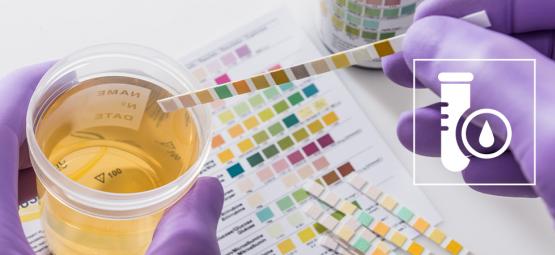
Passing a urine drug test is an unfortunate necessity for some stoners. Given how long it takes to rid the body of THC, many turn to age-old methods to cheat the screening. We break down the top 10 my ...
5 min
25 November 2025
Popular tricks vs reality: Can you really cheat a urine drug test?
Passing a urine drug test is an unfortunate necessity for some stoners. Given how long it takes to rid the body of THC, many turn to age-old methods to cheat the screening. We break down the top 10 my ...
-
 7 min
31 January 2025
How To Pass A THC Drug Test (2026)
There's no doubt that a drug test can be an intimidating prospect, but you're in the right place. We cover everything you need to know about THC drug tests, and delve into the various methods, both na ...
7 min
31 January 2025
How To Pass A THC Drug Test (2026)
There's no doubt that a drug test can be an intimidating prospect, but you're in the right place. We cover everything you need to know about THC drug tests, and delve into the various methods, both na ...
-
 4 min
9 October 2023
THC Detox: What Can You Do To Aid The Process?
Whether you're looking to take a tolerance break or want to quit THC altogether, there are numerous valid reasons to detox from cannabis. But is there anything you can do to speed up the process? Here ...
4 min
9 October 2023
THC Detox: What Can You Do To Aid The Process?
Whether you're looking to take a tolerance break or want to quit THC altogether, there are numerous valid reasons to detox from cannabis. But is there anything you can do to speed up the process? Here ...
-
 7 min
9 March 2023
How Long Does THC Stay In Your System?
Cannabis can stay in your system long after your high has completely faded, meaning you can test positive on a drug test even if you haven't smoked in a while. We'll tell you about the different facto ...
7 min
9 March 2023
How Long Does THC Stay In Your System?
Cannabis can stay in your system long after your high has completely faded, meaning you can test positive on a drug test even if you haven't smoked in a while. We'll tell you about the different facto ...
-
 7 min
4 January 2022
Drug Tests: What You Need To Know
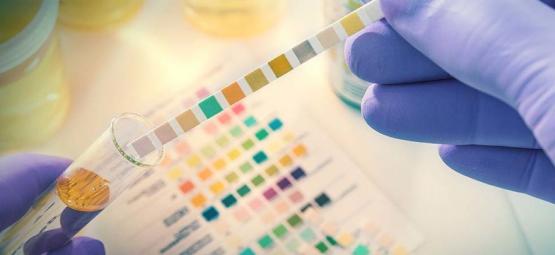
Drug tests range from a nuisance to potentially life-changing. If you're using drugs, and people really want to know, there are ways to find out. However, learning about the process can help you navig ...
7 min
4 January 2022
Drug Tests: What You Need To Know
Drug tests range from a nuisance to potentially life-changing. If you're using drugs, and people really want to know, there are ways to find out. However, learning about the process can help you navig ...