 8.6 out of 10 based on 81086 reviews







.svg)
.svg)
.svg)
.svg)
.svg)
.svg)



 Menu
Menu
-
 Vaporshop
All Categories
Vaporshop
Vaporshop
All Categories
Vaporshop
- Top 10 Vaporizers
- Spare Parts & Accessories
- AirVape XS GO (2021)
- Arizer Air MAX
- Arizer Extreme Q
- Arizer Solo 2
- Arizer V-Tower
- Arizer XQ2
- Boundless CFC 2.0 Vaporizer
- Boundless CFX
- Boundless TERA (V3)
- CRAFTY+
- DaVinci IQC
- Dr. Dabber Boost EVO
- DynaVap VapCap "M" PLUS 2023
- DynaVap VonG (i) Titanium
- Flowermate Aura
- Flowermate Cap Pro
- Flowermate Slick
- Flowermate V5.0S Pro
- G Pen Elite II
- G Pen Micro+
- G Pen Roam
- Hyer Big-E Rig
- MIGHTY+
- PAX Mini
- PAX Plus
- PLENTY
- Puffco Peak Smart Rig
- Puffco Plus
- Storm Vaporizer
- The Proxy (Puffco)
- VOLCANO CLASSIC
- VOLCANO HYBRID
- Vapman 2.0
- Vapman Click
-
 Smartshop
All Categories
Smartshop
Smartshop
All Categories
Smartshop
- Top 10 Smartshop
- Zamnesia Gift Cards
- After Party
- Aphrodisiacs
- Aromatherapy
- Blue Lotus
- Capsule Machines
- Crystals, Gemstones & Minerals
- Dream Herbs
- Drug Tests
- Extracts
- Happy Caps
- Herbal Tea
- Herbs & Seeds
- Incense
- Kanna
- Kratom
- LSA Seeds
- Mescaline Cactus
- Microdosing
- Nootropics
- Relaxing
- Salvia divinorum
- Smart Seeds
- Stimulants
- Supplements
- Tinctures
- Vape Herbs
-
 TRIBE
All CategoriesTRIBE
TRIBE
All CategoriesTRIBE
- My Membership
- Spend Gift Points
- TRIBE Sale
- Exclusive products
- Earn Extra Gift Points
- Early Access
- Refer a Friend
- Information
 Mushroom Dosage Calculator


 Help
Help United States
LED Grow Lights: Full-Spectrum Fixtures From 120 W to 480 W
We carry seven LED grow lights: the Zamnesia Phytonaut 120 W, 240 W, 320 W and 480 W, the Pure Factory Pure LED Q320 and Q420, and the Vanguard Hydroponics Cosmos LED Board 240 W. Every Phytonaut runs a balanced full spectrum on Sanan and Osram chips and publishes its PPF and efficacy, so you can pick by photons instead of guessing from the number on the box. UK orders go out fast and discreetly.
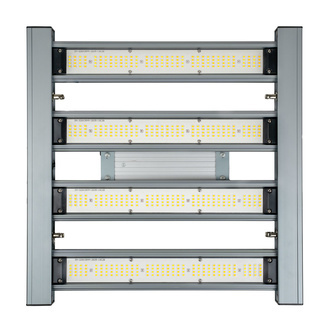
Phytonaut LED Grow Light 120 W (Zamnesia)
The Zamnesia Phytonaut 120 W is a compact full-spectrum LED grow light delivering 330.69 µmol/s PPF across a 60×60 cm canopy. Even light distribution, passive cooling, dimmable from 25–100%, and rated for 54,000+ hours. Built for small tents and compact indoor grows.
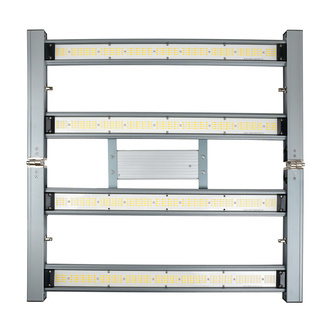
Phytonaut LED Grow Light 240 W (Zamnesia)
The Zamnesia Phytonaut 240 W is a full-spectrum LED grow light that produces 697.10 µmol/s PPF at 2.82 µmol/J for efficient indoor cultivation. A 120° light distribution helps keep coverage consistent across the canopy, while passive cooling, step dimming (25–100%), and IP65 protection make it a reliable, low-maintenance fixture for everyday grows.
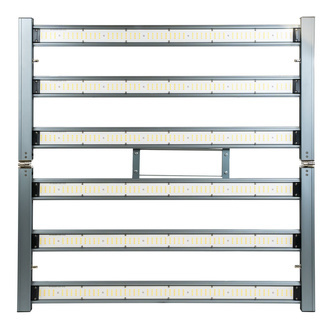
Phytonaut LED Grow Light 320 W (Zamnesia)
The Zamnesia Phytonaut 320 W is a full-spectrum LED grow light delivering 927.64 µmol/s PPF with a high 2.83 µmol/J efficacy for efficient, higher-output indoor grows. It uses a 120° light distribution for broad coverage, runs silently with passive cooling, and includes step dimming (25–100%) plus IP65 protection for humid environments.
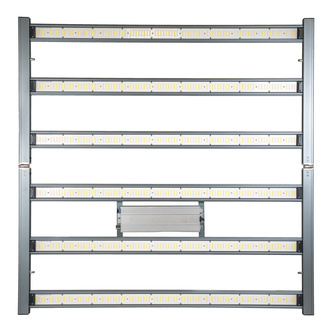
Phytonaut LED Grow Light 480 W (Zamnesia)
The Zamnesia Phytonaut 480 W is a full-spectrum LED grow light built for larger indoor grows that need strong, reliable light across the canopy. It delivers 1415.33 µmol/s PPF at 2.9 µmol/J, with a 120° light distribution for broad spread. Passive cooling, step dimming (25–100%), and IP65 protection make it a solid, low-maintenance option for long-term use.
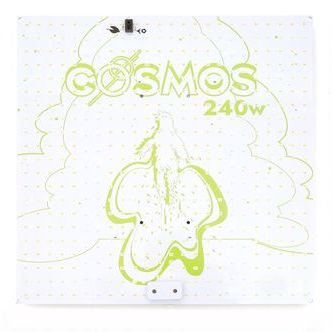
Cosmos LED Board 240W (Vanguard Hydroponics)
The Cosmos LED 240 W, by Vanguard Hydroponics is great for growing plants as it provides the amount of light for every stage of growth and supports optimal photosynthesis and development with its full spectrum feature.
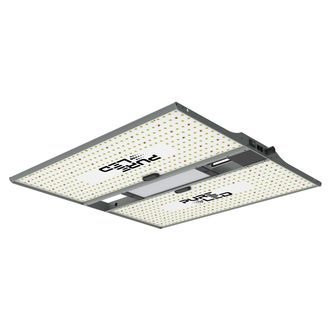
Pure LED Q320 Grow Light (Pure Factory)
Running a large grow room is nice—if you've got the lights to match its size. And with the Q320 Pure LED grow light from Pure Factory, you've got enough light to comfortably fill a 100–120 cm grow tent. Designed to maximise both vegetative growth and flower production, these lamps produce spectacular harvests all year round. What are you waiting for? Order yours now.
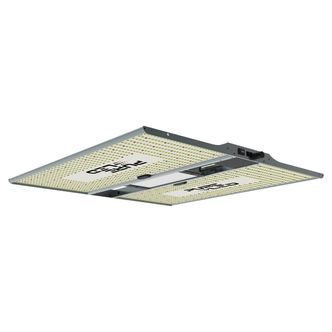
Pure LED Q420 Grow Light (Pure Factory)
Running a seriously big grow room? Then you need a serious grow lamp. Luckily, you've just found it—the Q420 Pure LED grow light from Pure Factory is perfect for larger tents and rooms measuring 120–150 cm. Lightweight, easy to set up, and complete with a few handy features, this lamp offers excellent functionality and the potential to pump out spectacular harvests—all year long.
Micromoles, Not Watts: How to Pick Your LED Grow Light
Watts don't tell you how bright a light is. Wattage is what the fixture pulls from the wall, and a "1000 W" panel on a marketplace listing is often just a headline number with no photon figure behind it. The two specs that tell you something real are PPF, measured in µmol/s, and efficacy, measured in µmol/J. All four Phytonaut fixtures publish both, which is why we keep pointing growers at them.
What PPF and Micromoles Per Joule Actually Mean
PPF is the total usable light a fixture puts out every second. The Phytonaut 120 W gives 330.69 µmol/s, the 240 W gives 697.10 µmol/s, the 320 W gives 927.64 µmol/s, and the 480 W gives 1415.33 µmol/s. Efficacy tells you how much of that you get per unit of electricity: 2.74 µmol/J on the 120 W, 2.82 on the 240 W, 2.83 on the 320 W, and 2.9 on the 480 W. When two lights sit in the same wattage class, efficacy is the number that separates them, so it's worth reading before anything else in the growshop.
From a Small Space to a Bigger Room: Matching Watts to Your Space
The 120 W is the smallest fixture in the Phytonaut range and is the small-space option, where weak corners cost you more than centre intensity. The 240 W steps up to medium grows that need full-cycle light from seedling to harvest. The 320 W suits bigger plant counts and longer cycles, and the 480 W is the full-room end of the ladder, with the best efficacy of the four. If you'd rather run a Pure Factory fixture, the Pure LED Q320 is a 320 W light with a 54 cm frame at 5.6 kg, and the Q420 is 420 W across 62 cm, up to 6.4 kg, with a 150 cm cable. Both Pure LED boards are built on Samsung LMB281+ PRO diodes plus Honglitronics SMD3535 chips, are IP 65 rated and hold a power factor above 0.90. That weight is real in the hand, so check your rope ratchets and tent bars before you hoist it.
120 Degrees, Hanging Height and Dimming Down for Seedlings
Every Phytonaut has a 120 degree beam angle, which pushes light out to the edges instead of stacking it in one hotspot in the middle. Hanging height does the rest of the work, and the documented canopy distances are the same across the range:
- Seedling or clone: 90 cm
- Vegetative: 60 cm
- Flowering: 40 cm
Leaves curling or bleaching means the light is too close, so raise it. Stretchy growth means it's too far, so drop it. Dimming is continuous on the rotary knob on the driver, from OFF to full power, and the fixtures also support 0 to 10 V external dimming systems if you want the Zamnesia Grow Environment Controller running the schedule. Watch out for two things: that controller is sold separately, and a short tent won't always give you the 90 cm of headroom a seedling wants.
Which of the Seven We'd Hang
Passive cooling means no fans on the Phytonaut fixtures, so the only thing you'll hear in the tent is your extraction. The diodes are Sanan and Osram chips, and IP65 splash resistance and a rated life of at least 54,000 hours cover the humid end of indoor growing. On paper the Phytonaut 320 W and the Pure LED Q320 are both 320 W lights, but we can quote 927.64 µmol/s and 2.83 µmol/J for the Phytonaut, while the Q320's documented specs are its wattage, frame size, weight, diodes, IP 65 rating and power factor. If you want numbers to plan a canopy around, the Phytonaut range is where they live. First light for a small space, take the 120 W. Running a full cycle in something larger, the 480 W at 2.9 µmol/J is the most efficient light on this page.
Frequently asked questions
- Do you sell a 1000 W LED grow light?
No, the biggest fixture we carry is the Phytonaut LED Grow Light 480 W, which puts out 1415.33 µmol/s PPF at 2.9 µmol/J. Plenty of cheap panels are sold as 1000 W when that figure has nothing to do with actual power draw or light output. Compare the PPF and efficacy figures instead and the picture gets a lot clearer.
- Which LED grow light suits a small space?
The Phytonaut LED Grow Light 120 W is the small-space option in the range. Its 120 degree spread pushes light into the corners, which matters more in a compact space than raw centre intensity. It gives 330.69 µmol/s PPF at 2.74 µmol/J.
- Are any of these 12 volt LED grow lights?
None of the seven run on 12 volts, they all plug into mains power. The 0 to 10 V spec you'll see on the Phytonaut range is a control signal for dimming, not a power supply, and it lets an external dimming system such as the Zamnesia Grow Environment Controller handle the output for you. There's also a rotary knob on the driver, running from OFF to full power, if you'd rather dim by hand.
- How far above my plants should the light hang?
For the Phytonaut range the documented distances are 90 cm for seedlings and clones, 60 cm in veg, and 40 cm in flower. Raise the light if leaves start curling or bleaching, lower it if growth goes stretchy. Check the distance again every time you train or top, since the canopy moves faster than you think.
- Can one LED grow light cover the whole grow cycle?
Yes. The Phytonaut fixtures run a balanced full spectrum on Sanan and Osram chips that works from seedling through flowering, so there's no swapping lamps halfway. The Pure Factory boards do the same job on Samsung LMB281+ PRO diodes plus Honglitronics SMD3535 chips. Dim it down for young plants and wind the output up as the canopy fills in and demands more light.