 8.6 out of 10 based on 81086 reviews







.svg)
.svg)
.svg)
.svg)
.svg)
.svg)



 Menu
Menu
-
 Vaporshop
All Categories
Vaporshop
Vaporshop
All Categories
Vaporshop
- Top 10 Vaporizers
- Spare Parts & Accessories
- AirVape XS GO (2021)
- Arizer Air MAX
- Arizer Extreme Q
- Arizer Solo 2
- Arizer V-Tower
- Arizer XQ2
- Boundless CFC 2.0 Vaporizer
- Boundless CFX
- Boundless TERA (V3)
- CRAFTY+
- DaVinci IQC
- Dr. Dabber Boost EVO
- DynaVap VapCap "M" PLUS 2023
- DynaVap VonG (i) Titanium
- Flowermate Aura
- Flowermate Cap Pro
- Flowermate Slick
- Flowermate V5.0S Pro
- G Pen Elite II
- G Pen Micro+
- G Pen Roam
- Hyer Big-E Rig
- MIGHTY+
- PAX Mini
- PAX Plus
- PLENTY
- Puffco Peak Smart Rig
- Puffco Plus
- Storm Vaporizer
- The Proxy (Puffco)
- VOLCANO CLASSIC
- VOLCANO HYBRID
- Vapman 2.0
- Vapman Click
-
 Smartshop
All Categories
Smartshop
Smartshop
All Categories
Smartshop
- Top 10 Smartshop
- Zamnesia Gift Cards
- After Party
- Aphrodisiacs
- Aromatherapy
- Blue Lotus
- Capsule Machines
- Crystals, Gemstones & Minerals
- Dream Herbs
- Drug Tests
- Extracts
- Happy Caps
- Herbal Tea
- Herbs & Seeds
- Incense
- Kanna
- Kratom
- LSA Seeds
- Mescaline Cactus
- Microdosing
- Nootropics
- Relaxing
- Salvia divinorum
- Smart Seeds
- Stimulants
- Supplements
- Tinctures
- Vape Herbs
-
 TRIBE
All CategoriesTRIBE
TRIBE
All CategoriesTRIBE
- My Membership
- Spend Gift Points
- TRIBE Sale
- Exclusive products
- Earn Extra Gift Points
- Early Access
- Refer a Friend
- Information
 Mushroom Dosage Calculator


 Help
Help United States
Psychedelic Cactus Types: Live Plants & Seeds
Most people lump every cactus on this page together, then wonder why their Peyote has barely changed in two years: Lophophora williamsii stays a fuzzy 3-4 cm button, while San Pedro can put on 30-40 cm in a single year. Our psychedelic cactus types split between rooted live cacti (plain, with pups, 3-cluster, grafted, plus Monstrose and crested growth forms) and 20-seed packs of Peyote, San Pedro, Peruvian Torch, Bolivian Torch and Echinopsis macrogona. Our Grafted Peyote sits on Eriocereus jusbertii, & every plant here wants special cactus soil rather than houseplant soil. Pick the one that matches your patience, not the one with the best photo.
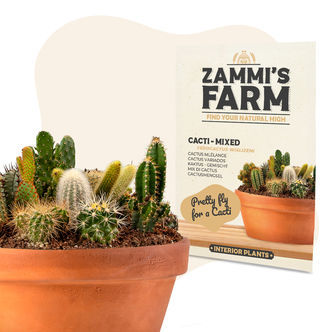
Cacti Mix (Ferocactus wislizeni) Seeds
Grow cacti from seed all year round with our Cacti Mix (Ferocactus wislizeni) Seeds. Soak your seeds for a day and sow indoors by sprinkling over the soil and gently pressing into it. Maintain moist for germination and place the...
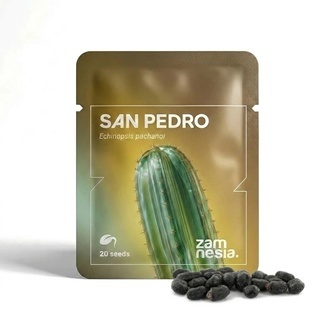
San Pedro (Echinopsis pachanoi) 20 seeds
Echinopsis pachanoi, the original San Pedro cactus is one of the sacred cacti of South America. For centuries, this cactus has played an important role in Shamanic culture. The cactus is a native to Bolivia and contains psychoactive compounds, the most important one Mescaline. With our fresh Echinopsis pachanoi...
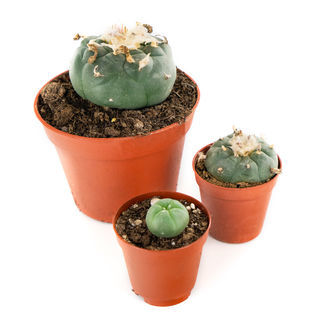
Peyote (Lophophora williamsii)
Peyote, considered a living god, El Mescalito has a long history among the natives of northern Mexico and Southwestern USA – at least 5700 years, say archeologists. Then it was demonized and driven underground by the Spanish conquerors in the 16th century. But thanks to the wonders of modern cultivation, you can have one of these sacred Lophophora williamsii in your own home.
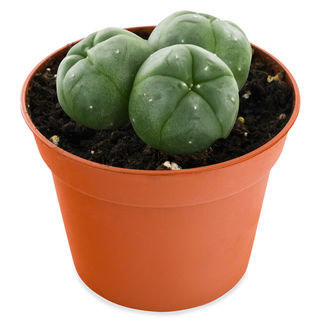
Peyote 3-Cluster (Lophophora williamsii)
Peyote (Lophophora williamsii), also known as El Mescalito, was almost doomed to fall into oblivion when Spanish conquistadores demonized it in the 16th century, but luckily this sacred cactus survived its ban and now you can order your own specimen. Natives of Northern Mexico and Southwestern USA used it for millennia in their rituals.
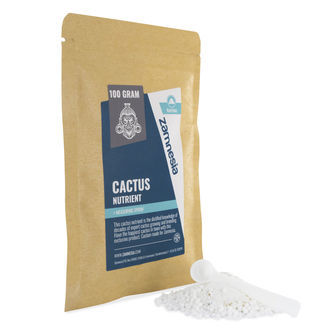
Cactus Nutrient
This cactus nutrient is the distilled knowledge of decades of expert cactus growing and breeding. Have the happiest cactus in town with this exclusive product. Custom made for Zamnesia.
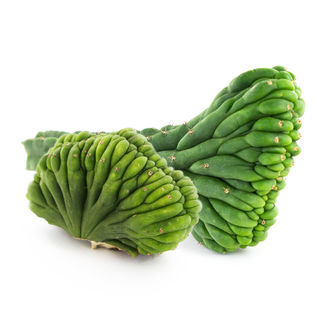
San Pedro Crested (Echinopsis pachanoi cristata)
Another Zamnesia first: The Crested San Pedro (Echinopsis pachanoi cristata)! This unique variation of the San Pedro cactus doesn’t just have one growth-point like the ordinary San Pedro but many. Each of these grow-points can grow at their own pace which makes the Crested San Pedro develop into very cool shapes.
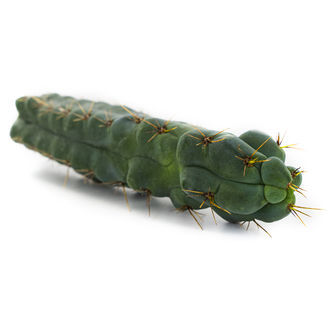
Echinopsis ''zamnesiana''
A happy accident or a gift from the god of psychedelics? While no one can say for sure, what we can say is Echinopsis ''zamnesiana'' certainly looks the part. You may notice that some will feature lumps, varied shapes, and all kinds of physical differences.
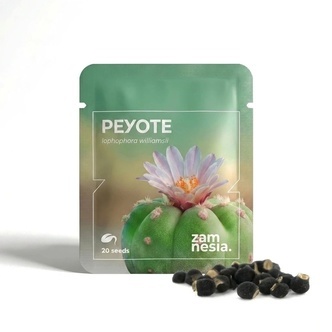
Peyote (Lophophora williamsii) 20 seeds
With our freshly harvested high quality Lophophora williamsii (Peyote) seeds you can now grow your own Peyote cacti at home. As compared to fully grown Peyote cacti plants, cultivating your own Peyote can be more economic because you can grow them at relatively low cost. Plus, being able to watch your Peyote seeds grow to full-grown flowering plants can make for a fascinating hobby all on...
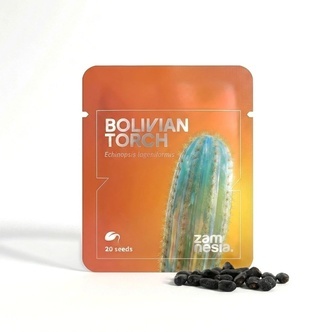
Bolivian Torch (Echinopsis lageniformis) 20 seeds
The Bolivian Torch (Echinopsis lageniformis) is one of the psychedelic cacti of South America that plays an important role in Shamanic rituals. It is similar in appearance to the San Pedro cactus but with fewer and wider...
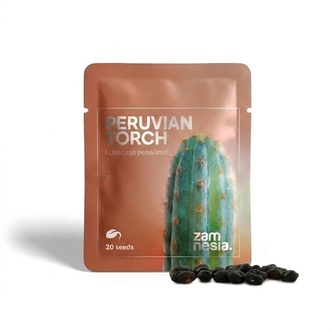
Peruvian Torch (Echinopsis peruviana) 20 seeds
Echinopsis peruviana, better known as the Peruvian Torch cactus is another of the hallucinogenic cacti that is native to South America. The Peruvian Torch contains the psychoactive alkaloid mescaline which makes for powerful, altered states of consciousness. With our fresh Peruvian Torch (Trichocereus peruvianus) seeds you can now grow this sacred cactus easily at home.
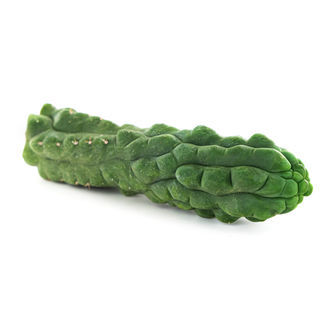
San Pedro (Echinopsis pachanoi) 'Monstrose'
Echinopsis pachanoi var. Monstrose is a rare mutant variety of the San Pedro Cactus. Each one is growing in different and unpredictable patterns so that every cactus is entirely unique. This interesting variety of the Echinopsis pachanoi makes a fantastic addition to the collection of every cactus aficionado!
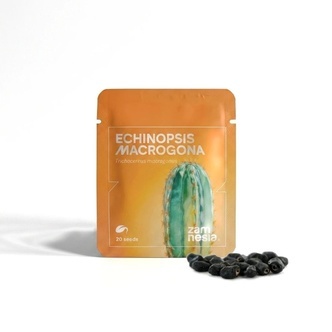
Echinopsis macrogona (Trichocereus macrogonus) 20 seeds
Echinopsis macrogona (AKA Trichocereus macrogonus) is a sacred cactus. Like the Peruvian torch cactus, Echinopsis macrogona contains mescaline which gives it powerful psychedelic and hallucinogenic properties. With the Echinopsis macrogona seeds available at Zamnesia you can now grow this sacred cactus at home!
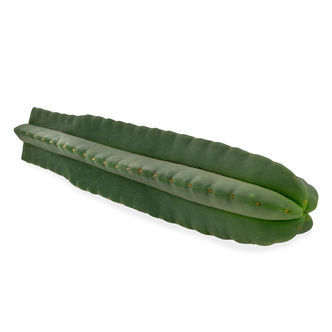
Super Pedro (Echinopsis scopulicola)
Echinopsis scopulicola can grow up to a huge 4 metres and has beautiful flowers that only open at night. Much like the famous peyote, it contains the psychotropic compound mescaline. Easy and rewarding to grow, Echinopsis scopulicola is a great addition to a psychedelic garden.
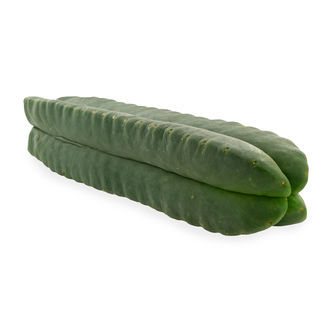
Super Pedro - 4 Ribs (Echinopsis scopulicola)
Super Pedro cacti have been used for over 2,000 years in the Andes. This 4-ribbed variety of Super Pedro is extremely rare and sourced from unique, healthy aged specimens.
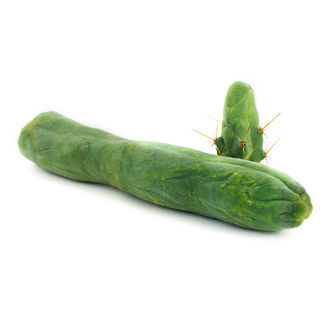
Bolivian Torch 'Monstrose' (Penis Plant)
The "monstrose" version of the Bolivian Torch (Echinopsis lageniformis) is a special cactus, also called the "Penis Plant". "Monstrose" signifies that this is a mutated form of the original cactus, in this instance the Bolivian Torch. A mutant cactus grows into an abnormal shape and therefore can take on a divergent form compared to cacti of the same species.
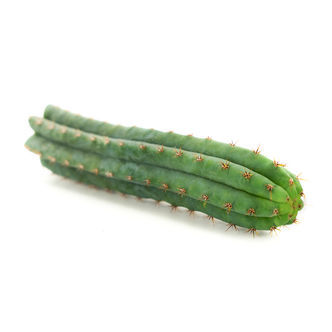
Peruvian Torch (Echinopsis peruviana)
Previously known as Trichocereus peruvianus. This cactus thrives at an altitude of 2000-3000 meters in it's natural habitat, the Andes in Peru and Ecuador. The Peruvian Torch grows at a high rate, contains the psychoactive compound mescaline and has green skin with a light blue glow. We sell different sizes - small, medium and large - all of which are perfect for home cultivation.
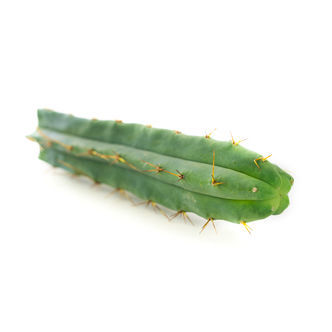
Bolivian Torch (Echinopsis lageniformis)
Formerly known as Trichocereus bridgesii. This cactus is naturally found in the Bolivian mountains. The natives of Bolivia call this cactus Achuma or Wachuma. We have several sizes of cuttings of the Bolivian Torch in stock.
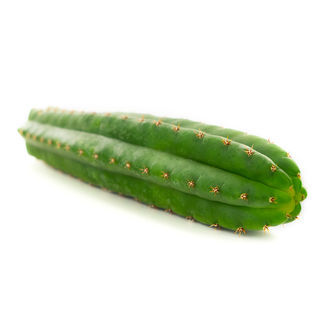
San Pedro (Echinopsis pachanoi)
A.k.a. Trichocereus pachanoi. The San Pedro cactus (Echinopsis pachanoi) originates from Peru and Ecuador. This cactus contains the psychoactive compound mescaline and plays a very important part in Latin American shamanic culture. We sell cuttings in different sizes that will effortlessly resume their growth once they are put back in the ground.
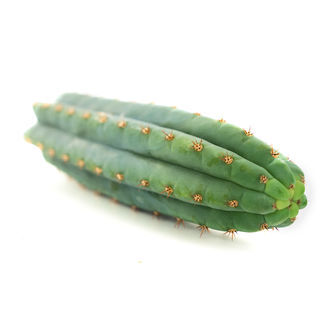
Echinopsis macrogona (AKA Trichocereus macrogonus)
Echinopsis macrogona (trichocereus macrogonus) is a sacred cactus similar to the Peruvian Torch. This easy-to-grow cactus contains the alkaloid mescaline.

Prickly Pack - Mescaline Cacti Seeds
This variety pack of cactus seeds contains everything you need to start cultivating your own mescaline cacti at home! There are numerous species of mescaline-containing cacti, and each one has a slightly different combination of alkaloids, giving each distinct effects. With this pack, you have a range of...
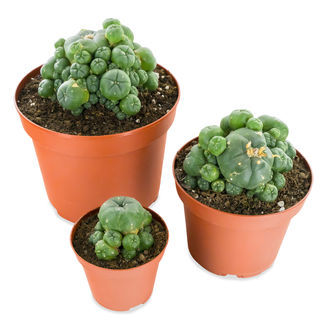
Peyote with Pups (Lophophora williamsii)
Mainly for the collector and connoisseur, our Peyote with Pups is a much rarer form of the illustrious peyote cactus. Originally found in the deserts of Mexico, these cacti have a historic reputation. If you are looking to obtain a plant that is a bit more unusual, then our Peyote with Pups may be for you.
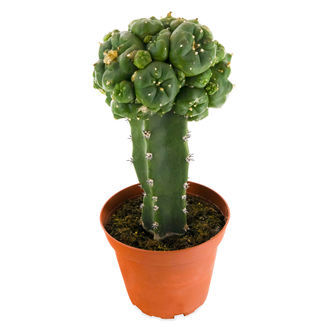
Grafted Peyote (Lophophora williamsii)
This is a combination of two cacti - an Eriocereus jusbertii with a Peyote cluster grafted on top. A small drawback is the slightly lower production of mescaline, but the increased growth rate makes up for it. When flowering, this plant produces beautiful pink flowers, but psychonauts are more interested in the alkaloid Mescaline, which is found in the tissue of the plant.
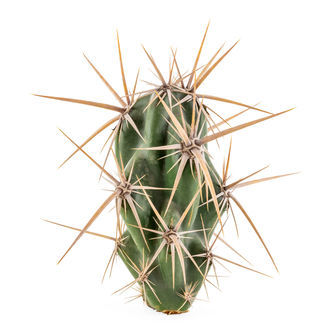
Opuntia invicta (Grusonia invicta)
Native to Baja California in Mexico, Opuntia invicta (or Grusonia invicta) is a unique member of the prickly pear cactus genus. It grows thick, long reddish-purple spines; intense, dark green stems, as well as stunning yellow flowers.
Buttons, Torches & Odd Growth Forms: Picking Your Cactus
The word "psychedelic cactus" covers two very different shapes of plant. On one side sits Peyote (Lophophora williamsii), a spineless button with woolly tufts that rarely lifts more than 3-4 cm above the soil, hiding most of itself in a long taproot underground. On the other are the columnar Echinopsis species: San Pedro (Echinopsis pachanoi) from the Peruvian and Ecuadorian Andes at 2000-3000 m, Peruvian Torch (Echinopsis peruviana) with its bluish-green skin and 6-9 rounded ribs, and Bolivian Torch (Echinopsis lageniformis), light green with 4-8 ribs and spines up to 6-7 cm. Mescaline is simply part of the alkaloid chemistry of these species, Peyote alone makes over 50 alkaloids, and it's the reason botanists have studied them for a century. What matters on your windowsill is growth rate, and there the torches win by a mile.
Rooted Plant Or A Tray Of Twenty Seeds?
A rooted plant and a seed pack are two different purchases. Our live cacti arrive as healthy rooted specimens or cuttings you sink straight into cactus soil, where they throw new roots within weeks and carry on as if nothing happened. A 20-seed pack of Lophophora williamsii is a project: sow into roughly 50% sand, 25% grit or bims and 25% potting soil, keep it above 10C, and expect pinhead seedlings for a long while before anything looks like the catalogue photo. Even cultivated Peyote needs close to three years from seed to a flowering plant around three inches across. Watch out for the impatience trap. If you want something to actually look at this summer, buy a rooted San Pedro and grow the seeds alongside it as your slow project.
Cactus Soil, Sun & A Watering Rhythm That Works
Houseplant compost is the number one killer here. It holds water and carries the wrong nutrient balance, so use proper cactus soil with sand and perlite mixed through, in a pot with a punctured base. Stand that pot in a shallow dish of water and let the plant drink from below, it takes exactly what it needs and the crown stays dry. Rhythm: once a week in spring and autumn, only once every 2-3 weeks in winter, and 3-5 times a week through high summer. Full sun, and feed with our Cactus Nutrient rather than the general-purpose stuff you'd give a Ficus. New cuttings go somewhere shady for the first month and get no water at all for the first 2-3 weeks, that's when the roots form.
Pups, Grafts, Crests & The Monstrose Oddities
This is where collectors get hooked. Peyote with Pups throws multiple heads instead of one, and our 3-cluster and grafted Peyote go further still, a graft sits the slow button on faster rootstock so it bulks up sooner. Crested (cristate) forms grow along a fan-shaped line rather than a single point, giving you wavy brain-like ridges. Monstrose forms, including the Bolivian Torch 'Monstrose' and San Pedro 'Monstrose', grow in lumpy irregular columns with ribs that wander. They're one-off plants, not uniform stock. If you'd rather start easy and cheap, the Prickly Pack seed mix or the Cacti Mix (Ferocactus wislizeni) will teach you germination before you risk a grafted specimen. And if you fancy spines with attitude, Opuntia invicta is the one we'd put on the sunniest shelf.
Frequently asked questions
- Which psychedelic cactus types do you actually stock?
The mescaline-containing species on this shelf are Peyote (Lophophora williamsii), San Pedro (Echinopsis pachanoi), Peruvian Torch (Echinopsis peruviana), Bolivian Torch (Echinopsis lageniformis), Super Pedro (Echinopsis scopulicola) and Echinopsis macrogona, plus our house cultivar Echinopsis 'zamnesiana'. Most come as rooted live plants and several also as 20-seed packs. Opuntia invicta and the Cacti Mix (Ferocactus wislizeni) are ornamental cacti with no mescaline chemistry.
- Which one grows fastest?
San Pedro, easily. Under good conditions it can add 30-40 cm a year, and Peruvian Torch and Bolivian Torch are also fast columnar growers that reach several metres in habitat. Peyote is the opposite end of the scale, staying a small button and taking about three years from seed to a mature flowering plant even when cultivated.
- Should I buy a rooted cactus or a seed pack?
Buy the rooted plant if you want something established now, it just needs cactus soil, a shady month to settle and no water for the first 2-3 weeks. Buy a 20-seed pack if the germinating is the fun part and you don't mind waiting years for size. Loads of our customers do both, one rooted San Pedro on the sill and a seed tray on the go.
- What is a Monstrose or crested cactus?
Both are natural growth mutations. A crested (cristate) cactus grows from a line rather than a single point, so it fans out into wavy, brain-like ridges. A Monstrose form, like the Bolivian Torch 'Monstrose', grows as a lumpy irregular column with ribs that wander off course. Every one is slightly different, so treat them as individual specimens rather than matching stock.
- How often should I water a mescaline cactus?
Once a week in spring and autumn, 3-5 times a week in the peak of summer, and only once every 2-3 weeks in winter. Water from below by standing a pot with a punctured base in a shallow dish, the soil wicks up what it needs and the body stays dry. Use cactus soil with sand and perlite, never standard houseplant compost, and feed with Cactus Nutrient during the growing season.