 8.6 out of 10 based on 81059 reviews







.svg)
.svg)
.svg)
.svg)
.svg)
.svg)



 Menu
Menu
-
 Vaporshop
All Categories
Vaporshop
Vaporshop
All Categories
Vaporshop
- Top 10 Vaporizers
- Spare Parts & Accessories
- AirVape XS GO (2021)
- Arizer Air MAX
- Arizer Extreme Q
- Arizer Solo 2
- Arizer V-Tower
- Arizer XQ2
- Boundless CFC 2.0 Vaporizer
- Boundless CFX
- Boundless TERA (V3)
- CRAFTY+
- DaVinci IQC
- Dr. Dabber Boost EVO
- DynaVap VapCap "M" PLUS 2023
- DynaVap VonG (i) Titanium
- Flowermate Aura
- Flowermate Cap Pro
- Flowermate Slick
- Flowermate V5.0S Pro
- G Pen Elite II
- G Pen Micro+
- G Pen Roam
- Hyer Big-E Rig
- MIGHTY+
- PAX Mini
- PAX Plus
- PLENTY
- Puffco Peak Smart Rig
- Puffco Plus
- Storm Vaporizer
- The Proxy (Puffco)
- VOLCANO CLASSIC
- VOLCANO HYBRID
- Vapman 2.0
- Vapman Click
-
 Smartshop
All Categories
Smartshop
Smartshop
All Categories
Smartshop
- Top 10 Smartshop
- Zamnesia Gift Cards
- After Party
- Aphrodisiacs
- Aromatherapy
- Blue Lotus
- Capsule Machines
- Crystals, Gemstones & Minerals
- Dream Herbs
- Drug Tests
- Extracts
- Happy Caps
- Herbal Tea
- Herbs & Seeds
- Incense
- Kanna
- Kratom
- LSA Seeds
- Mescaline Cactus
- Microdosing
- Nootropics
- Relaxing
- Salvia divinorum
- Smart Seeds
- Stimulants
- Supplements
- Tinctures
- Vape Herbs
-
 TRIBE
All CategoriesTRIBE
TRIBE
All CategoriesTRIBE
- My Membership
- Spend Gift Points
- TRIBE Sale
- Exclusive products
- Earn Extra Gift Points
- Early Access
- Refer a Friend
- Information
 Mushroom Dosage Calculator


 Help
Help United States
Microgreens Seeds: From Tray to Plate in Days
Microgreens aren't sprouts. You sow them into a shallow tray of compost or coir, give them light, and cut them above the soil once the cotyledons have opened and the first true leaves show, anywhere from 7 to 21 days after sowing. We stock 8 varieties here, from Raphanus sativus (Daikon Green radish, the fastest of the lot) through Pisum sativum pea shoots to Brassica oleracea kale. A windowsill and a pair of scissors is genuinely the whole setup.
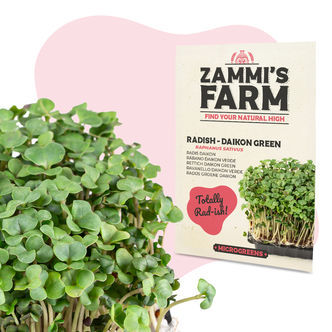
Microgreens Radish - Daikon Green (Raphanus sativus) Seeds
Green Daikon Radish is delicious and highly nutritious, used typically as a garnish in Japanese cuisine. Daikon Green Microgreens, however, are just as packed with flavor yet with much higher nutrient density. To grow them, simply sow seeds at a high density in a propagator and harvest the sprouts...


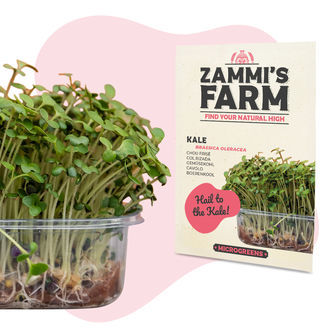
Microgreens Kale (Brassica oleracea) Seeds
Kale (Brassica oleracea) is in the spotlight for being one of the most nutritious greens on the market. But did you know that kale sprouts are even more packed with nutrients than fully mature kale plants? Sow kale seeds in a propagator at high density, and harvest your sprouts after 7–10 days for a...

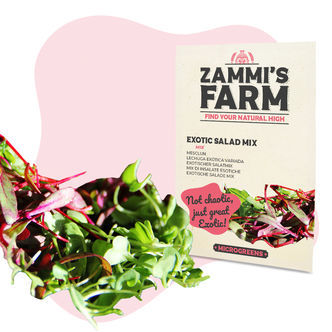
Microgreens Exotic Salad Mix - Seeds
Take your salad game to the new level with Exotic Salad Mix. It's really easy, just scatter the seeds on top of the soil and press gently. Cover with a thin layer of soil and spray with water. Use the mister once or twice a day to keep soil most. Harvest after 2–3 weeks, when you see the first set of...
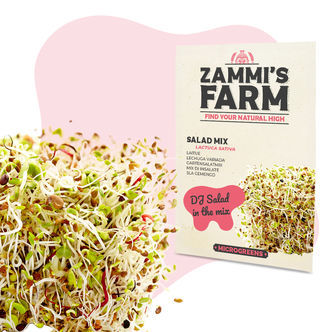
Microgreens Salad Mix (Lactuca sativa) Seeds
With a selection of great greens available here, the vibrant Microgreens Salad Mix is ideal for adding to salads and can actually be grown all year round. Quick to flourish, sow the seeds when it works for you; just be sure to keep the soil moist but not waterlogged, and this plant will deliver...
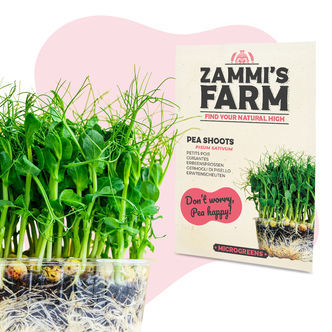
Microgreens Pea Shoots (Pisum sativum) Seeds
To get the best out of your Microgreens Pea Shoots, simply sow the seeds in early Spring, and they'll be fast to flourish. Able to be grown in warm outdoor spaces or in a small windowsill or balcony space, keep the soil moist throughout but not waterlogged, and these sweet leaves will begin to appear...

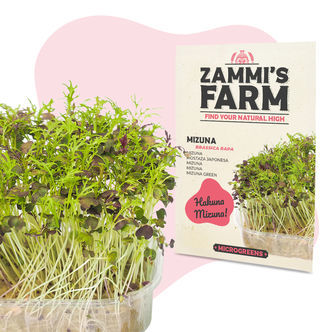
Microgreens Mizuna (Brassica rapa) Seeds
These fast-to-flower Asian leaves can be cultivated in a wide variety of settings and environments. They are typically low maintenance and suit growers of all skill sets. Sow the seeds in early Spring and enjoy them after just a few weeks of flourishing. Microgreens Mizuna has a mustard-like flavour...
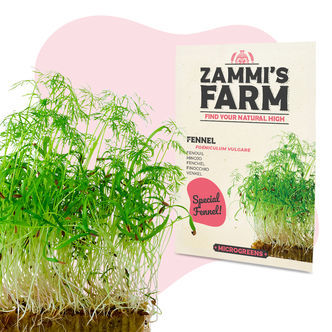
Microgreens Fennel (Foeniculum vulgare) Seeds
Peppery, mild and sweet, Microgreens Fennel takes just 7-14 days to germinate and just another 2 weeks on top until the earliest greens are ready to harvest and use in a multitude of dishes. Just provide them with plenty of light and warmth and keep the surrounding soil moist, and you simply can't go wrong! This is one fast-to-grow
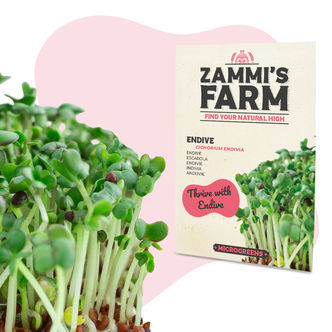
Microgreens Endive (Cichorium endivia) Seeds
Ideal for being added to salads, soups and a variety of dishes, the Microgreens Endive have long been used since the days of ancient Greece! Rich in vitamins K and C, you too can now enjoy the great flavours. Seeds take 2–3 days to germinate, and the earliest leaves that sprout around the 8–15 day...
Trays, Blackout and Scissors: How Microgreens Actually Work
Microgreens get lumped in with sprouts, and they're not the same crop. Sprouts are germinated seeds eaten whole, root and all, usually rinsed in a jar of water in the dark. Microgreens go into a growing medium, get light, and get cut above the soil line once the seedling has its cotyledons plus the first hint of true leaves. Different stage, different plant, and it tastes it.
Sprouts, Microgreens and Baby Leaf: Where the Line Sits
Sprouts spend their whole life damp and warm, which is why food-safety advice around them is stricter and why we'd rather grow microgreens for anything going on a plate raw. Microgreens sit in coir or shallow-tray compost, get cut with scissors between 7 and 21 days, and the roots stay behind in the tray. Baby leaf is the same seed left to grow on in deeper soil for several weeks, then picked leaf by leaf. Same packet, three different harvest points.
Cotyledons, True Leaves and the Clock
Read the cotyledons, the first pair of seed leaves, then look for the smaller true leaves pushing up between them. That's your cue. The quickest thing we stock is Microgreens Radish Daikon Green (Raphanus sativus), cut after roughly a week. Brassica oleracea kale is ready 7 to 10 days after sowing at high density. Cichorium endivia endive is up in 2 to 3 days with the first pickable leaves at 8 to 15, and Foeniculum vulgare fennel germinates in 7 to 14 days then gets cut about two weeks later. Pisum sativum pea shoots are the slowest here, and even they finish inside two to three weeks.
Coir, Compost and the Blackout Trick
Two to three centimetres of shallow-tray compost or a rehydrated coir block is plenty. Sow thick, press the seed into the surface, mist once, then invert a second tray on top for a blackout period of 2 to 4 days. The seedlings stretch, shed their seed coats, and come up even. After that, light. Water from the bottom by pouring into the tray underneath so the leaves stay dry. Watch out for heavy top watering in still, warm air, that combination is how you end up with a grey fuzz of damping off at the stem bases. Crack a window or park a small fan nearby.
Which Leaves End Up on Which Plate
Flavour is the fun part. Microgreens Mizuna (Brassica rapa) brings a mustard-like heat that lands at the back of the throat, and the thin stems snap when they're fresh, which makes it great scattered over noodles or eggs. Daikon radish is peppery with more bite behind it. Pea shoots go sweet and crunchy and do well on a balcony. If you'd rather not grow one leaf at a time, Microgreens Exotic Salad Mix puts several greens in a single tray, harvested at 2 to 3 weeks once the first true leaves show, while kale stays mild enough to hide in a sandwich.
Where We'd Start
Sow daikon radish first. A week is short enough that you stay interested, and the peppery snap tells you straight away whether you like microgreens. Pea shoots second. The honest bit: most microgreens don't grow back after cutting, brassicas least of all, so each tray is one harvest and then you resow. USDA Agricultural Research Service work on brassica seedlings has measured higher concentrations of some vitamins per gram in young leaves than in the mature plant, which is a decent bonus. The real reason to bother is that supermarket cress tastes of very little, and a tray of mizuna cut ten minutes before dinner doesn't.
Frequently asked questions
- What are microgreens, exactly?
They're young seedlings, harvested once the cotyledons have opened and the first true leaves appear, usually 7 to 21 days after sowing. You grow them in a medium like coir or shallow-tray compost, not in water, and you cut the stems above the soil so the roots stay behind. That puts them between sprouts and baby leaf greens.
- How long until I can cut my first tray?
Depends on the species. Raphanus sativus daikon radish is cut after roughly a week, Brassica oleracea kale at 7 to 10 days, and Cichorium endivia endive gives pickable leaves from 8 days. Pisum sativum pea shoots take the longest at two to three weeks.
- Do microgreens grow back after harvesting?
Mostly no. Brassicas like mizuna, kale, and radish are a single cut because you remove the growing point along with the stem. Pea shoots sometimes push out a smaller second flush. Plan on resowing a fresh tray each time and stagger your sowings a few days apart.
- Are microgreens the same as sprouts?
No. Sprouts are germinated seeds eaten whole, root included, and they're grown damp in the dark. Microgreens sit in a growing medium, get light after a short blackout period, and only the leaves and stems get eaten. That difference in method is also why microgreens carry fewer food-safety worries.
- Can I grow microgreens without a grow light?
Yes, a bright windowsill works for most of what we stock, especially in spring and summer. Give the tray a blackout period of 2 to 4 days first, then move it into the light and turn it daily so the stems don't all lean one way. In a dark winter room the leaves get pale and leggy, so a cheap LED sat close above the tray helps.