 8.6 out of 10 based on 81086 reviews







.svg)
.svg)
.svg)
.svg)
.svg)
.svg)



 Mushroom Dosage Calculator


 Help
Help United States

 5 min
5 min
How to Grow Chillies: A Step-by-Step Guide for Outdoor Growing



Growing peppers at home can be a hugely rewarding task. Harvesting your own carefully cultivated chillies to use in cooking is a great feeling. But, from seed to harvest, how do you achieve this? We've put together 10 easy-to-follow steps that are perfect for beginners looking to get the best from their pepper plants.
This guide focuses on outdoor growing, so you can plan around your local climate and make the most of warm days and sheltered spots. You’ll find the complete chilli plant growing step-by-step process in a simple order, with each stage linking to a deeper guide when you want more detail.
Whether you want to grow your own chillies for sauces, pickles, or fresh heat, we’ll cover what matters most: choosing a suitable variety, starting at the right time, hardening off, planting out, feeding and watering, and keeping plants healthy until harvest. By the end, you’ll know how to grow chillies in a way that’s practical, realistic, and geared for outdoor success.
Why grow your own chillies outdoors?
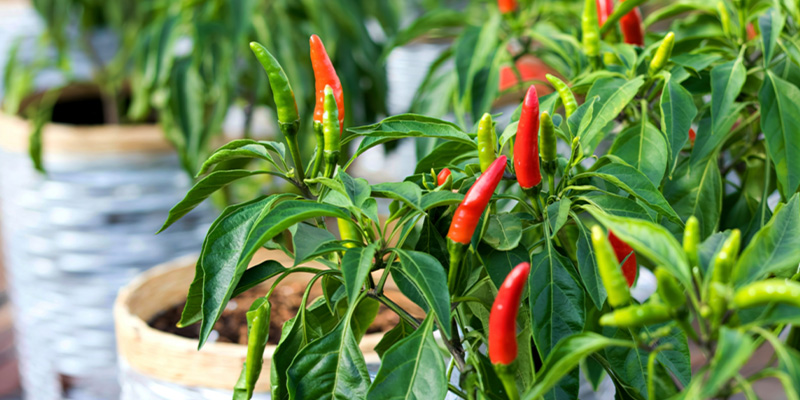
Growing outdoors keeps things simple: real sunshine, natural airflow, and plenty of room for plants to branch out. And when you’re growing chillies at home, you’re not stuck with supermarket mildness; you can pick varieties for sweetness, smokiness, citrus notes, or serious heat, then harvest at the exact ripeness you like.
Planting chilli seeds: Getting started
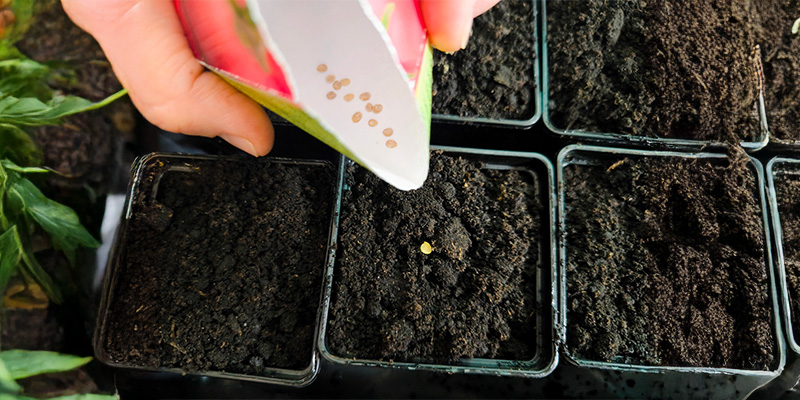
Strong outdoor plants begin with the right genetics. Choose varieties that match your summer: shorter-season types for cooler regions, and longer-season plants where warmth is reliable.
Soil is just as important as the seed. Aim for a light, fertile mix that holds moisture without staying soggy.
Because chillies need time to mature, many growers sow under cover, then move seedlings outside once nights are mild. For the full setup on temperatures, light, and timing, see our hot peppers indoors guide.
When to plant chilli seeds
Timing matters with chillies. In most of Europe, outdoor sowing only works once late spring has fully arrived, so many gardeners start earlier indoors to gain a few weeks.
Sow under cover from February to April, then move plants outside from May to June after the last frost. Planting out is safest when nights are consistently above 10°C. If you started indoors, avoid shock from sudden sun and wind by hardening plants off first. Use our hardening off guide.
Where to grow chillies outdoors
Pick the warmest microclimate you’ve got. Chillies want long hours of direct sun, plus shelter from strong winds that can snap branches, dry pots quickly, and knock flowers off before they set fruit.
Beds work well if the soil drains fast and doesn’t stay cold after rain. Raised beds warm earlier in spring, while containers give you maximum control (and the option to move plants into sun traps or under cover). For the full breakdown of site choice, spacing, and growing in beds vs pots, see beds for hot peppers.
Chilli plant care: Watering, feeding, and general care
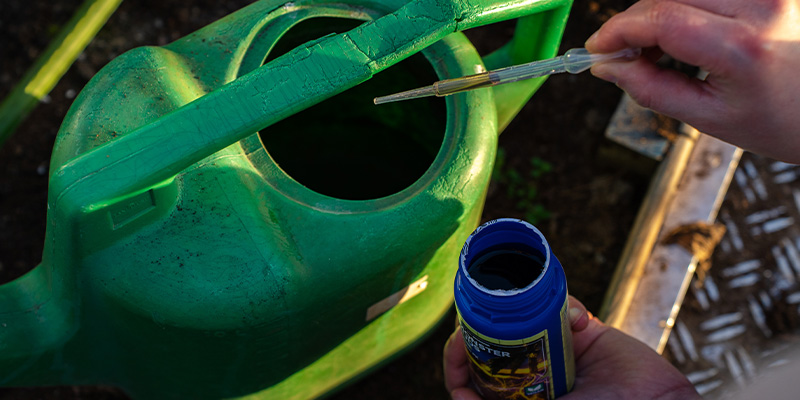
Good chilli plant care boils down to consistency: steady moisture, plenty of sun, and feeding that matches the growth stage. Water deeply, then let the top layer of soil dry slightly before watering again. Roots hate sitting in cold, wet compost, so drainage in pots and beds matters just as much as frequency.
Feeding doesn’t need to be complicated. Early on, a balanced feed supports leafy growth; later, once flowering and fruiting begin, many growers shift towards higher potassium levels. For exact timings and nutrient ratios, see fertilise hot pepper plants.
How chillies grow: From seedling to flowering
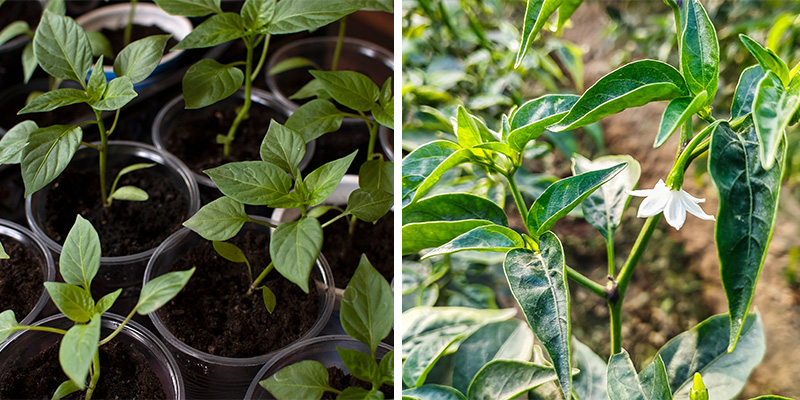
After germination, seedlings focus on roots and a few sets of true leaves. Once the days are reliably warm, plants move into vegetative growth.
When plants are mature enough, buds form at the nodes and open into small star-like flowers. Flowering is your sign that the foundations are solid.
Chilli seed germination
Outdoors, germination is often slower, around 2–4 weeks depending on weather, while protected starts commonly appear in 7–14 days.
Warmth and steady moisture are the essentials. Keep the medium lightly moist (not drenched) and aim for stable conditions so seeds don’t stall.
Seedling stage: Early chilli plant growth
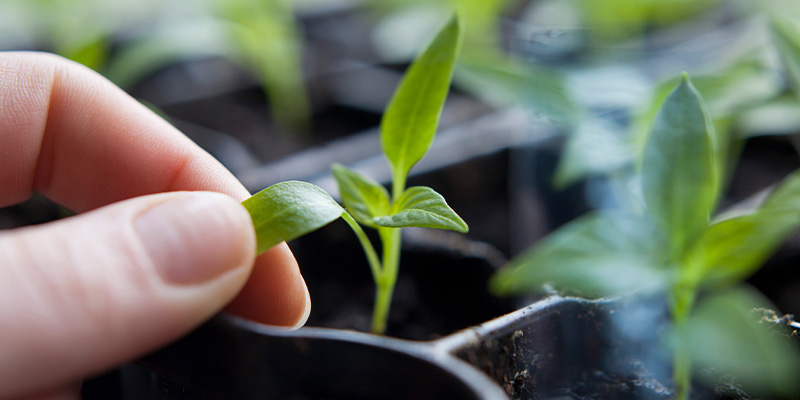
First, you’ll see two smooth seed leaves (cotyledons). The first true leaves that follow look like miniature chilli leaves.
Light and airflow are key at this stage. Bright light helps prevent leggy seedlings, while gentle airflow supports stronger stems. Water carefully, too; aim for even moisture, but avoid saturating the medium.
Seedlings are usually ready for transplanting once they have 2–4 sets of true leaves and a root system that holds the plug together. For the full method, see transplant hot pepper plants.
Vegetative growth: Building a strong chilli plant
Vegetative growth is when chillies build momentum: more nodes, more branching, and faster development.
Outdoors, progress speeds up during stable warm spells and slows after chilly nights, heavy rain, or persistent wind. Signs of a healthy plant include a thickening main stem, even green foliage, and balanced branching rather than one stretched shoot.
Pruning and training chilli plants during vegetative growth
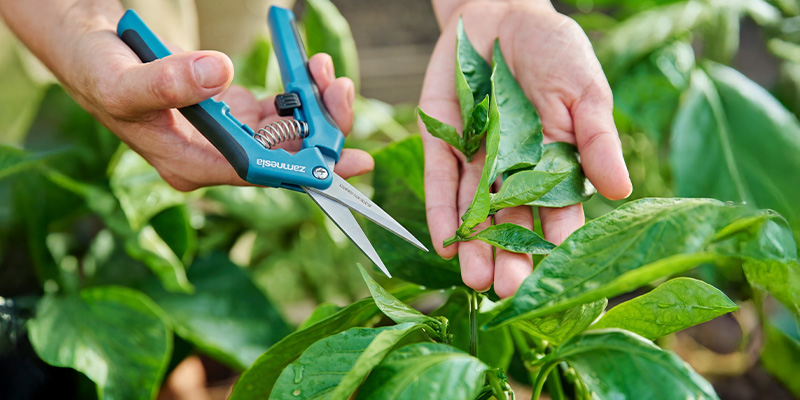
Pruning is optional, but a light tidy-up can improve airflow and shape, especially in humid or crowded spots. Focus on removing a small amount of inner growth or low shaded leaves, rather than stripping the plant.
Support often matters more than pruning outdoors. Stakes, cages, or soft ties can prevent branches from flopping or snapping as plants load up with fruit. For a deeper walkthrough, see prune hot pepper plants.
Flowering stage: When chilli plants start producing flowers
Flowering begins when the plant is mature and conditions are favourable. Warm days, mild nights, and plenty of direct sun help buds form, and flowers open consistently, while cold snaps or dull spells can slow things down.
Outdoors, pollination is usually handled by wind and insects. Blossom drop is common when plants are stressed. Heatwaves, cold nights, drought, or soaking followed by nutrient imbalance are typical triggers. If problems persist, see our chilli pepper pests overview.
From flower to first chillies
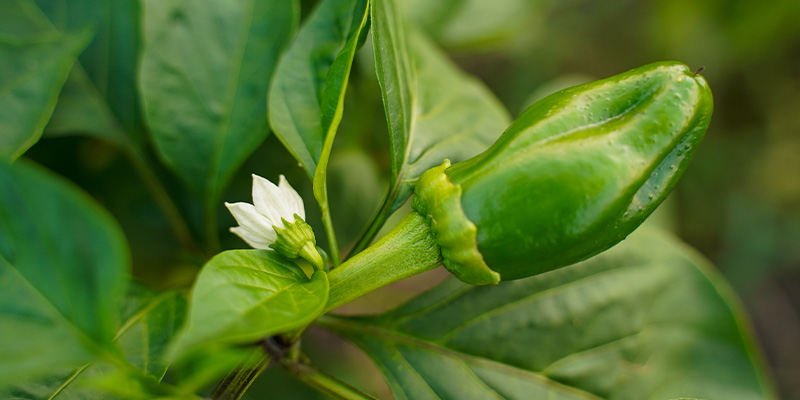
After pollination, petals fade and drop, and the swollen base behind the flower becomes a tiny chilli.
This stage is all about consistency. Big swings in watering or heavy feeding can slow progress or cause misshapen fruit. In most cases, peppers reach full size while still green. Ripening and colour change come later once the fruit has matured.
Common problems when growing chillies outdoors
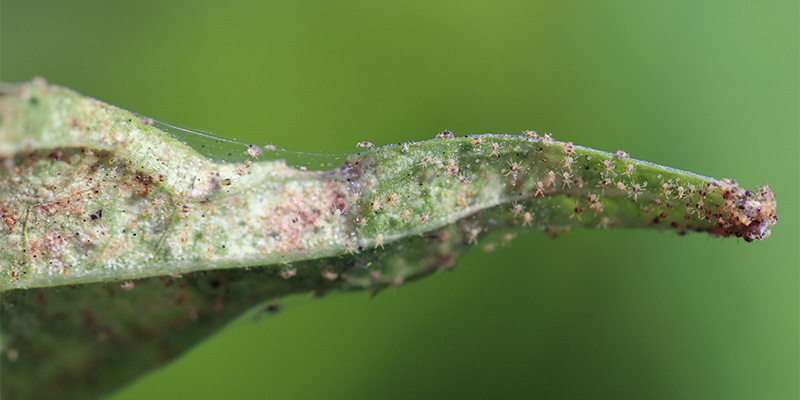
Aphids, whiteflies, spider mites, and caterpillars are common, and fungal issues can creep in during cool, wet periods, so regular leaf checks help you act early.
Blossom end rot is another classic issue: a dark, sunken patch on the fruit. It’s usually linked to inconsistent watering and calcium uptake rather than a disease, so stabilising moisture is often the fix. Our blossom end rot guide breaks down causes and solutions.
For prevention, keep plants spaced for airflow, avoid overfeeding with nitrogen, and use gentle controls when needed. See natural pest prevention for practical options.
How to grow hotter and healthier chillies
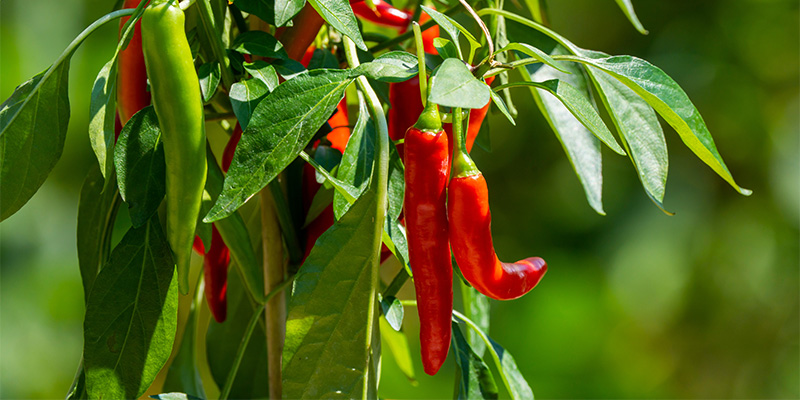
When it comes to growing hotter and healthier chillies, it's important to harness strong genetics, long hours of sun, and a feeding schedule that matches the plant’s stage. Consistent moisture supports fruit set, while avoiding nitrogen-heavy feeds during flowering helps keep energy on peppers rather than leafy growth.
A little controlled stress can encourage flavour and heat. However, prolonged drought, cold nights, or overfeeding often backfire. For advanced tweaks, see our growing hotter chilli pepper plants guide.
When and how to harvest chillies
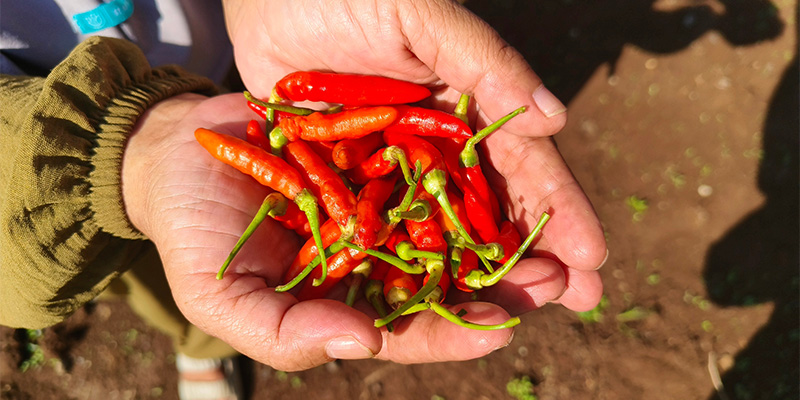
Many varieties can be picked green once they’ve reached full size, but letting peppers colour up usually brings more sweetness, aroma, and (often) extra heat. Look for firm fruit, strong colour, and a chilli that comes away cleanly.
To keep plants productive, avoid tearing stems. Use clean scissors or secateurs and leave a short piece of stalk attached. Harvesting regularly also encourages more flowering and fresh pods. For variety-specific guidance, see harvest hot peppers.
What to do after harvesting
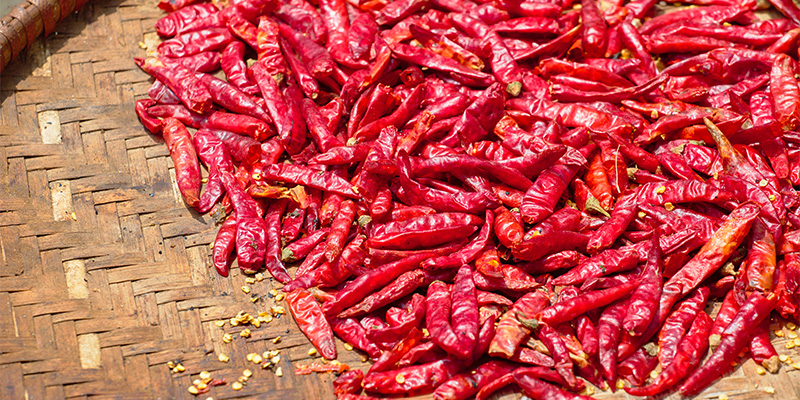
Fresh chillies keep well in the fridge for short-term storage, but drying is ideal for long-term storage. Dry pods gently with good airflow, then store them airtight away from heat and light to preserve aroma, flavour, and heat.
For methods, timings, and equipment options, see dry chillies.
Can you keep chilli plants for next year?
Many chilli varieties are perennial in the right conditions, so overwintering is possible, and often worth it for healthy, high-performing plants (especially slower growers).
After the last harvest, trim back, check for pests, and move the plant to a bright, frost-free, cool spot to slow growth. Over winter, the goal is maintenance: lighter watering and minimal feeding. For the full walkthrough, see overwinter pepper plants.
Grow your own chillies: Final tips for success
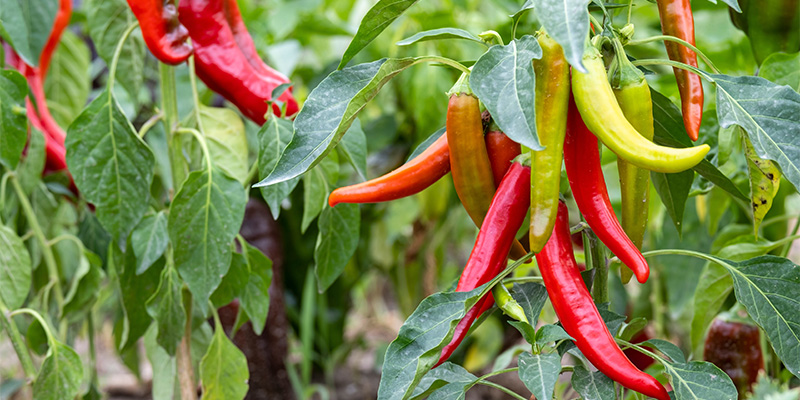
Success comes down to nailing the flow from seed to harvest: start strong, pot up when roots fill out, harden off properly, then keep watering and feeding steadily once flowering begins. Stay on top of pests early, avoid big swings in moisture, and harvest little and often to keep plants producing.
Every season teaches you something, so treat your setup like a living experiment. Track what worked, tweak one variable at a time, and try a few new varieties as your confidence grows. And whenever you want to fine-tune a specific stage, feeding, pruning, pests, or harvesting, the guides linked above let you go deeper without losing that simple seed-to-harvest flow.
-
 6 min
6 November 2025
Top 20 hottest peppers in the world (2026 edition)
Think you can handle the heat? Discover the 20 hottest peppers of 2026, from record-breaking Pepper X to legendary Carolina Reaper and Scotch Bonnet. Explore fiery heat levels, unique flavours, and...
6 min
6 November 2025
Top 20 hottest peppers in the world (2026 edition)
Think you can handle the heat? Discover the 20 hottest peppers of 2026, from record-breaking Pepper X to legendary Carolina Reaper and Scotch Bonnet. Explore fiery heat levels, unique flavours, and...
-
 5 min
27 January 2022
The Surprising Benefits Of Combining Cannabis And Hot Peppers
Cannabis chills out the body and the mind. Peppers, in contrast, send a jolt through the central nervous system and wake up the senses. However, despite their differences, these two plant species...
5 min
27 January 2022
The Surprising Benefits Of Combining Cannabis And Hot Peppers
Cannabis chills out the body and the mind. Peppers, in contrast, send a jolt through the central nervous system and wake up the senses. However, despite their differences, these two plant species...
-
 6 min
24 September 2021
Ghost Pepper (Bhut Jolokia): How To Grow And Use
Ready to put your spice limit to the test? The ghost pepper is synonymous with massive heat, but it also has some big flavours to showcase too. If you've ever wanted to cultivate these chilli...
6 min
24 September 2021
Ghost Pepper (Bhut Jolokia): How To Grow And Use
Ready to put your spice limit to the test? The ghost pepper is synonymous with massive heat, but it also has some big flavours to showcase too. If you've ever wanted to cultivate these chilli...
-
 4 min
5 August 2021
Hot Peppers And The Scoville Scale
There's no denying the appeal of spicy food. Whether you're keen on Mexican delicacies, Pad Thai, or Vindaloo curries, they have one thing in common; peppers.
4 min
5 August 2021
Hot Peppers And The Scoville Scale
There's no denying the appeal of spicy food. Whether you're keen on Mexican delicacies, Pad Thai, or Vindaloo curries, they have one thing in common; peppers.