 8.6 out of 10 based on 81119 reviews







.svg)
.svg)
.svg)
.svg)
.svg)
.svg)


 Mushroom Dosage Calculator


 Help
Help United States
 7 min
7 min
Best Ways to Use Cannabis Without Smoking



While it is an easy way to get your cannabis fix, smoking also has a fair amount of drawbacks. With that in mind, we've put together a list of some alternative ways you can ingest cannabis. While the process won’t always be as potent or iconic as smoking, there are many benefits to each method. Join us as we discuss the pros and cons of each one!
While it's still a go-to for many, there are plenty of ways to use cannabis without smoking it. Thanks to modern products and know-how, today's cannabis user has more options than ever.
Fed up with rolling those joints? Bored with smoking? A whole new world of options awaits.
Smokig marijuana isn't the only option
Smoking marijuana has been part of cultures around the world for a long time, but that doesn't make it a flawless method. The health risks linked with smoking tobacco are well documented, and what many people don't realise is that a lot of those drawbacks come from the act of smoking itself.
Whether it's tobacco, marijuana, or any other smokable product, heating plant matter and inhaling the smoke can irritate and damage the lungs. So if you'd rather sidestep those potential issues, the alternatives below are well worth a look.
A quick word on dosing and safety
Before diving in, one golden rule applies to almost every method here, especially anything you swallow: start low and go slow. Edibles, drinks, tinctures, and capsules take much longer to kick in than smoking, so it's easy to take more before the first dose has landed. Begin with a small, measured amount, wait to feel the full effect, and only then decide whether to take more. If you're using cannabis for wellbeing reasons or alongside medication, it's always sensible to speak to a healthcare professional first.
1. Eating raw cannabis
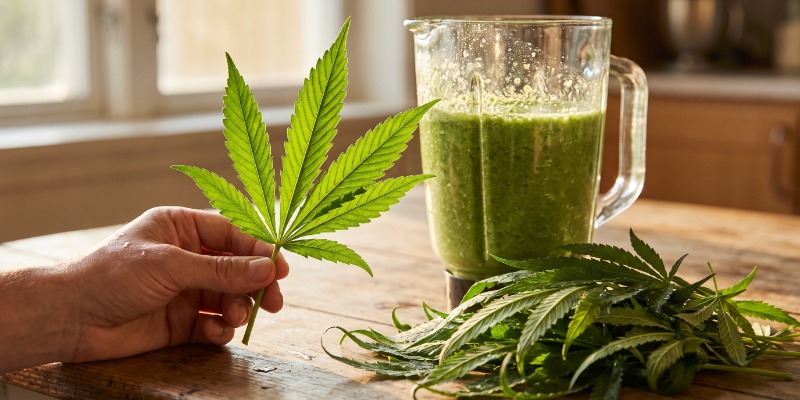
While edibles are a cannabis staple, people rarely consider eating raw cannabis. Yet the humble fan leaf is often described as a superfood, and for good reason. Raw cannabis is easy to add to dishes or smoothies and makes a great way to get your daily greens. It's rich in antioxidants and contains compounds linked to heart health, so there's plenty to like.
Pros of eating raw cannabis
- Vitamins: Raw cannabis is packed with vitamins such as C and K, and is a source of iron and calcium, all of which support a healthy immune system.
- Versatile: It has plenty of culinary uses. It brightens up salads, complements mains, and blends into smoothies with ease.
- No waste: Growers often harvest the buds and discard the leaves. If you're resourceful, you can put those leaves to good use and make the most of your plants.
Cons of eating raw cannabis
- No high: Eating raw cannabis won't get you high. Because the plant hasn't been through decarboxylation, the THC is still in its acidic form, THCA, which isn't intoxicating. That's a downside if you're after a buzz, though some people specifically seek out THCA for non-intoxicating reasons.
- An acquired taste: The very thing that appeals to some will put others off. If you're not a fan of leafy greens, this one may not be for you.
2. Cannabis-infused edibles
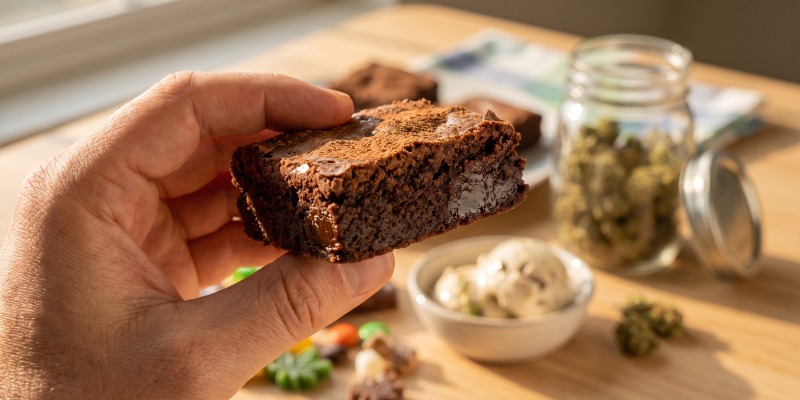
Anyone who's visited a dispensary or coffeeshop will be familiar with edibles. Whether you buy them or make your own, they can be a great time if you play your cards right. Everyone's seen pot brownies, but there are far more ways to craft edibles, from cannabis candy to THC-spiked ice cream. The only real limit is your imagination.
Pros of cannabis-infused edibles
- Effectiveness: Although they take longer to set in, edibles deliver a strong, long-lasting high.
- Dosing: With a plan and the right measuring approach, you can gauge how much cannabis you're taking. Pre-made edibles remove the guesswork with clear dosing on the packaging.
- Discretion: Since edibles look like ordinary food, only you know what's in them.
- Experimentation: Have fun in the kitchen and test your baking and cooking skills while you're at it.
Cons of cannabis-infused edibles
- Risk of overindulging: Because edibles take a while to kick in, it's easy to misjudge how much you've had and end up far higher than intended. This is exactly why the "start low, go slow" rule matters.
- Slow onset: Effects typically take 30 to 90 minutes to appear and can last around 4 to 8 hours, sometimes longer depending on the dose and the person.
- Dosing inconsistency: Homemade edibles can be hard to dose accurately unless you know the cannabinoid content of your starting material.
3. Cannabis-infused drinks
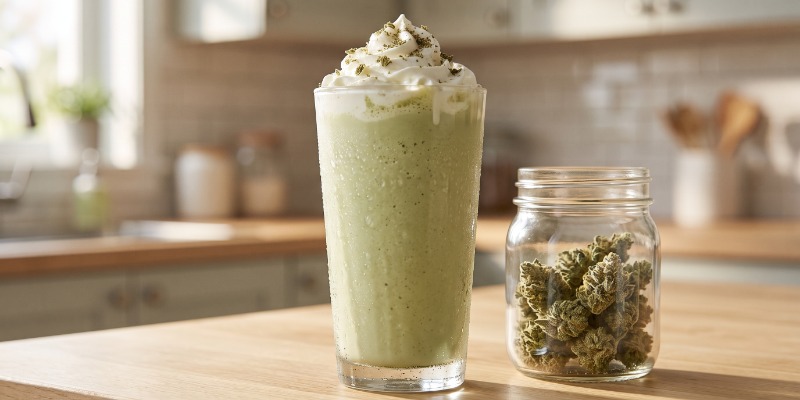
Cannabis smoothies are one option, but have you ever tried a cannabis milkshake? It turns out you can make some seriously indulgent cannabis drinks with your favourite strain.
Whip up a batch of cannabutter or oil and you can add cannabis to almost any beverage. Start your day with a cannabis coffee, or, if you want something more refreshing, make your own weed-infused sodas and juices.
Pros of cannabis-infused drinks
- Refreshing: There are few nicer ways to enjoy cannabis than in an ice-cold drink.
- Easy to make: With cannabutter or a cannabis concentrate on hand, you're only a few drops away from an infused drink.
- Control: Using cannabutter or oil as your source lets you decide how much goes into each drink.
Cons of cannabis-infused drinks
- Easy to overdo: As with edibles, misjudging the amount can leave you higher than you planned, and the delayed onset makes this easy to do.
- Weak when store-bought: Where they're legally sold, ready-made infused drinks are often fairly mild.
4. Dry-herb vaping
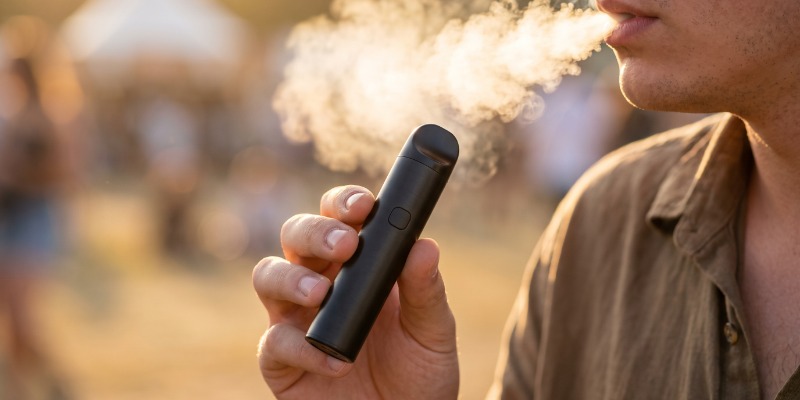
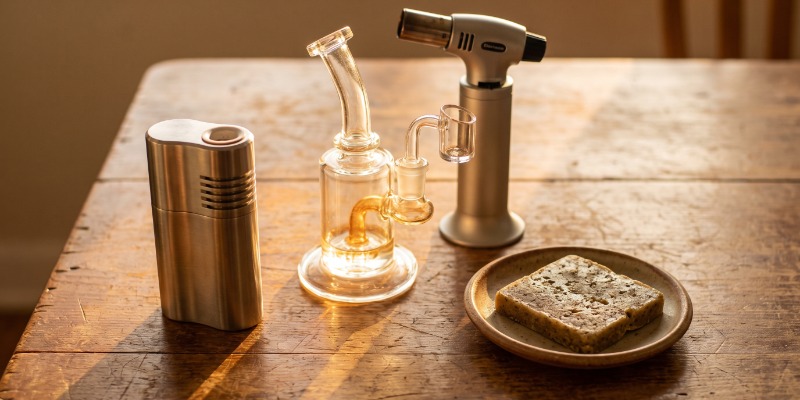
One of the most obvious alternatives to smoking is vaping. Instead of burning your herb, a dry-herb vaporizer gently heats it so the cannabinoids and terpenes are released as vapour rather than smoke. With devices available across nearly every price range, there's something to suit most needs. (For concentrates specifically, see dabbing below.)
Pros of dry-herb vaping
- Taste: With no combustion between you and your herb, you get smoother, more flavourful hits.
- Product diversity: There's a huge range of devices, from pocketable portables to desktop units, and some handle both herb and concentrates.
- User-friendly: Load your herb, set a temperature, and you're away. Many devices let you fine-tune the experience.
Cons of dry-herb vaping
- Charging: Batteries don't last forever, so keeping your device charged is part of the routine.
- Maintenance: Vaporizers need occasional cleaning to keep working well.
- Experience: Some people find vaping less ritualistic and satisfying than smoking.
- Upfront cost: A quality vaporizer can be a notable initial outlay.
5. Dabbing and concentrates
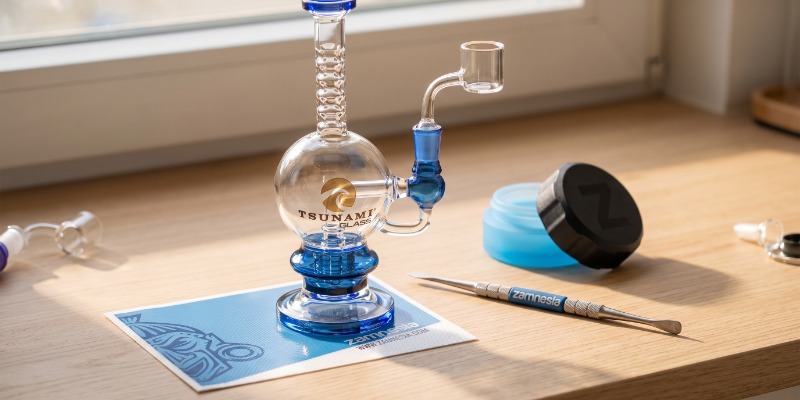
Dabbing involves flash-vaporising a small amount of cannabis concentrate, such as wax, shatter, rosin, or live resin, against a hot surface and inhaling the vapour. Because it isn't combustion, dabbing is smoke-free, but be warned: concentrates are extremely potent, so this method is best suited to experienced users rather than beginners.
Pros of dabbing
- Potency: Concentrates are far stronger than flower, delivering intense effects from a very small amount.
- Fast onset: Effects arrive almost immediately, much like smoking, without burning plant matter.
- Flavour: Quality concentrates, especially solventless ones like rosin, can be intensely aromatic and terpene-rich.
Cons of dabbing
- Not beginner-friendly: The high potency makes it easy to overdo, and tolerance can climb quickly.
- Kit and learning curve: Traditional setups need a rig and a heat source, though modern electronic rigs simplify things considerably.
- Still inhalation: While there's no smoke, you are still inhaling hot vapour, so it isn't entirely irritation-free.
6. Cannabis tinctures
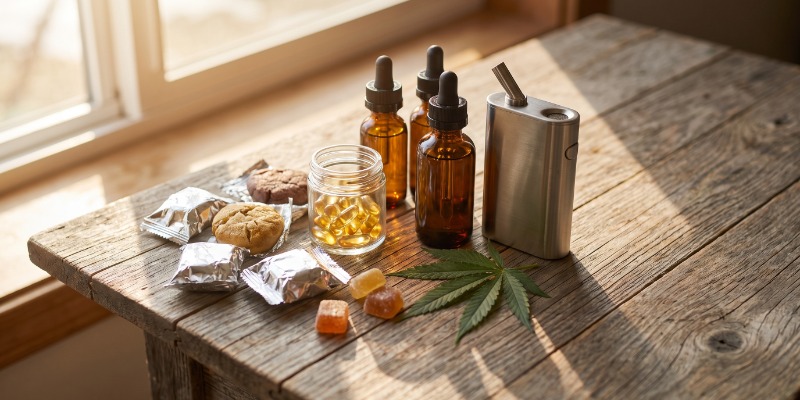
Tinctures were once among the most common ways to take cannabis. They faded over the decades as smoking, edibles, and concentrates took over, but cannabis tinctures are making a real comeback as an easy, low-key way to dose throughout the day.
Pros of cannabis tinctures
- Easy to use: Place a few drops under your tongue and you're done, or add them to food and drink.
- Precise dosing: A dropper bottle makes it easy to take consistent, even doses.
- No calories: Unlike edibles and drinks, tinctures don't add to your calorie count.
- Long-lasting: Kept somewhere cool and dark, a tincture has a long shelf life.
Cons of cannabis tinctures
- No ritual: Tinctures skip the grinding-and-rolling ceremony, which can feel a little clinical to some.
- Working with alcohol: Making your own is straightforward, but some people prefer to avoid alcohol. There are alcohol-free versions and ready-made options if so.
7. Cannabis capsules and softgels
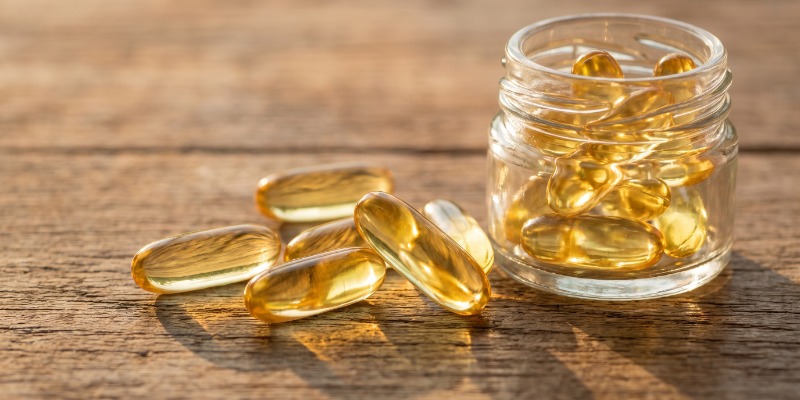
If you like the effects of edibles but not the sugar or the guesswork, capsules are a tidy alternative. They're simply decarboxylated cannabis, or cannabis oil, packed into a swallowable capsule, giving you a food-free, pre-measured dose.
Pros of cannabis capsules
- Precise, repeatable dosing: Each capsule contains a known amount, so it's easy to stay consistent day to day.
- Discreet and convenient: They look like any other supplement and need no preparation.
- No taste: Handy if you're not keen on the flavour of cannabis in food or under the tongue.
Cons of cannabis capsules
- Slow onset: Like edibles, capsules pass through digestion first, so effects take a while to arrive.
- Less flexible: A fixed dose per capsule makes fine adjustments trickier than with a tincture.
8. Cannabis topicals
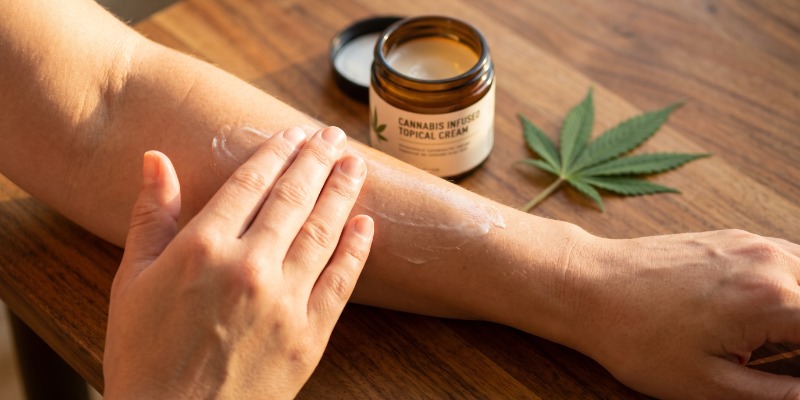
Cannabis-infused creams, balms, and oils have been popular for a long time. They won't get you high, but they contain compounds that interact with the endocannabinoid system in the skin, which is why cannabis skincare has such a following.
Pros of cannabis topicals
- All-natural options: Many are made without harsh chemicals, so you get the benefits of the plant in a clean formula.
- Great for skin: Users frequently report smoother, more hydrated skin after use.
- Targeted and non-intoxicating: You can apply them to a specific area without any psychoactive effect.
Cons of cannabis topicals
- No high: A plus for some, a dealbreaker for others. Standard topicals stay local and won't induce psychoactive effects.
- Localised only: They work where you apply them rather than delivering whole-body effects.
9. Transdermal patches
Transdermal patches deserve a category of their own, because unlike ordinary topicals they're designed to carry cannabinoids through the skin and into the bloodstream. That means, depending on the formulation, they can produce systemic and even psychoactive effects, released slowly and steadily over hours.
Pros of transdermal patches
- Steady, long-lasting release: A single patch can deliver a consistent dose over many hours, avoiding the peaks and troughs of other methods.
- Discreet and hands-off: Once applied, there's nothing else to do, and the patch is easy to conceal.
- Precise formulations: Patches are typically made to a set cannabinoid dose, which aids consistency.
Cons of transdermal patches
- Slow to adjust: Because release is gradual, you can't dial the effect up or down quickly.
- Skin sensitivity: Some people may react to the adhesive or find placement fiddly.
10. Cannabis suppositories
Bear with us on this one. It may sound old-fashioned, but suppositories are a long-established way to administer all kinds of substances, cannabis included.
Making your own is surprisingly simple. Take capsules roughly 2.5 cm long, fill them with cannabis-infused coconut oil, and let them set. That's essentially it.
Pros of cannabis suppositories
- An option when others aren't: They can be useful for people who struggle to consume cannabis orally, for example due to nausea.
- Minimal to no high: Because the route largely bypasses the brain's cannabinoid receptors, effects tend to be felt in the body rather than the head, which suits those seeking relief without strong intoxication. You may also see claims of high bioavailability, though the evidence here is limited and debated.
Cons of cannabis suppositories
- Not for everyone: The method of administration understandably puts some people off.
- Niche: With so many easier options available, suppositories remain a specialist choice.
Frequently asked questions
What is the healthiest way to consume cannabis without smoking?
There's no single answer, but methods that avoid combustion entirely, such as edibles, tinctures, capsules, and topicals, sidestep the lung irritation associated with inhaling smoke. Dry-herb vaping is also popular as a lower-irritation alternative to smoking, since it heats rather than burns the plant.
Which non-smoking method is the strongest?
Dabbing concentrates delivers the most intense effects by far, thanks to the high potency of the material. Among ingested options, edibles and capsules tend to produce a stronger, longer-lasting experience than inhaled methods, though they take longer to arrive.
How long do edibles take to kick in?
Usually 30 to 90 minutes, with effects lasting roughly 4 to 8 hours. Because the onset is slow, it's wise to wait for the full effect before considering more.
Can you consume cannabis without getting high at all?
Yes. Eating raw cannabis, using standard topicals, and taking suppositories generally produce little or no psychoactive effect, making them popular with people seeking the plant's other properties rather than a high.
Find the method that suits you
There's no single right way to enjoy cannabis, whether you're vaping, dabbing, or tucking into an edible. Whichever method you choose, take it steady, start low, and enjoy responsibly.
-
 6 min
27 October 2023
How To Decarb Your Cannabis: 3 Methods
Decarboxylation (Dee-car-BOX-ee-lay-shun) is the process of activating cannabis by applying sufficient heat. It causes the cannabinoids in weed to change from their inactive storage form to their...
6 min
27 October 2023
How To Decarb Your Cannabis: 3 Methods
Decarboxylation (Dee-car-BOX-ee-lay-shun) is the process of activating cannabis by applying sufficient heat. It causes the cannabinoids in weed to change from their inactive storage form to their...
-
 7 min
5 November 2019
Everything You Need To Know About Cannabis Edibles
Cannabis edibles offer a completely unique way to enjoy weed. However, taking edibles can be intimidating, especially if you are new to it or have had a negative experience. Luckily, ensuring a...
7 min
5 November 2019
Everything You Need To Know About Cannabis Edibles
Cannabis edibles offer a completely unique way to enjoy weed. However, taking edibles can be intimidating, especially if you are new to it or have had a negative experience. Luckily, ensuring a...
-
 3 min
4 September 2019
How To Make Your Own Cannabis Salve For Skin Care
Cannabinoids are a great treat for your skin. A cannabis salve is fairly easy to make and is a perfect way to use all those trimmings.
3 min
4 September 2019
How To Make Your Own Cannabis Salve For Skin Care
Cannabinoids are a great treat for your skin. A cannabis salve is fairly easy to make and is a perfect way to use all those trimmings.
-
 3 min
3 November 2018
Is Raw Cannabis Leaf A Superfood?
Independently of whether you're a medical or recreational consumer, eating fresh cannabis leaves can help you discover a whole new side of the plant you've never experienced before. Let's dive into...
3 min
3 November 2018
Is Raw Cannabis Leaf A Superfood?
Independently of whether you're a medical or recreational consumer, eating fresh cannabis leaves can help you discover a whole new side of the plant you've never experienced before. Let's dive into...